
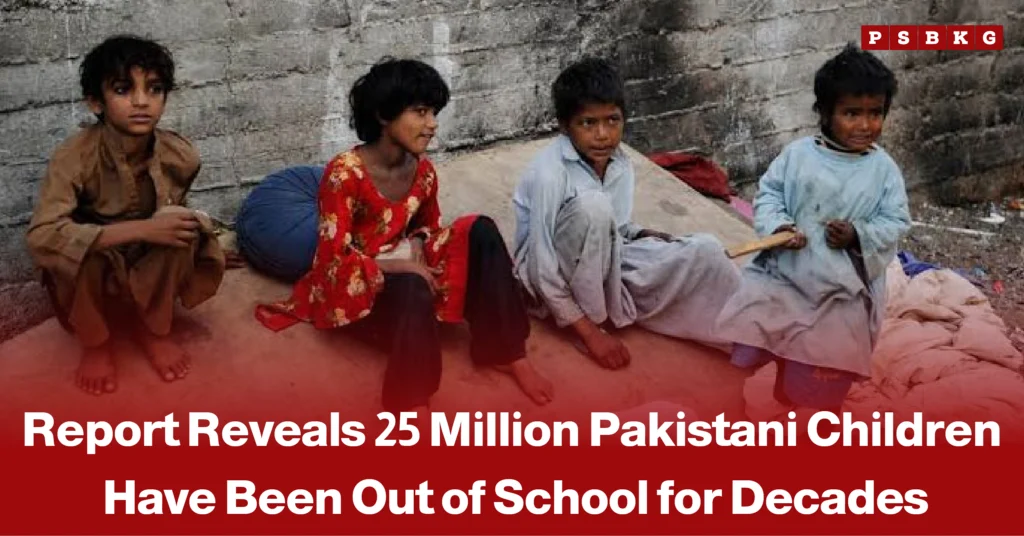
A new report has revealed that nearly 25 million children in Pakistan have remained out of school for decades, highlighting one of the country’s biggest educational challenges. The findings have renewed concerns about equal access to education and the long-term impact on the nation’s social and economic development. Education experts say the figures reflect deep-rooted issues that require immediate and sustained attention. The report has sparked fresh debate among policymakers, educators, and civil society organizations. Many believe that unless urgent action is taken, millions of children could continue to miss opportunities that education provides.
A Long-Standing Education Crisis
According to the report, Pakistan continues to have one of the largest populations of out-of-school children in the world. Despite various education initiatives over the years, millions of children have never enrolled in school or have dropped out before completing their basic education. Experts say this challenge has persisted for decades, affecting both urban and rural communities, although the situation is often more severe in remote and underdeveloped areas.
Why So Many Children Are Missing School
Several factors contribute to the high number of out-of-school children. Poverty remains one of the biggest barriers, as many families struggle to afford educational expenses or depend on children to help earn an income.
Limited access to schools, inadequate infrastructure, teacher shortages, early marriages, and social challenges also prevent many children, especially girls, from receiving a proper education.
The Impact on Pakistan’s Future
Education is widely regarded as the foundation of national development. When millions of children remain outside the education system, the consequences extend beyond individual families and affect the country’s economic growth, workforce, and social progress. Experts warn that improving literacy and increasing school enrollment are essential for reducing poverty, creating employment opportunities, and strengthening Pakistan’s long-term development.
Calls for Stronger Government Action
Following the report, education specialists have urged authorities to introduce more effective policies aimed at increasing enrollment and reducing dropout rates. They emphasize the need for greater investment in schools, teacher training, and educational facilities across the country. Many experts also believe that financial assistance for low-income families and community awareness campaigns could encourage more parents to send their children to school.
Every Child Deserves an Education
Child rights advocates continue to stress that access to education is a fundamental right. They argue that every child, regardless of economic background or place of residence, should have the opportunity to attend school and build a better future. Communities, parents, educational institutions, and policymakers all have an important role to play in ensuring that children remain in school and complete their education.
A Shared Responsibility
Addressing Pakistan’s education crisis requires cooperation between the government, private sector, development organizations, and local communities. Long-term solutions will depend on consistent investment, better planning, and policies that focus on reaching the most vulnerable children. Experts believe that reducing the number of out-of-school children will not happen overnight, but sustained efforts can gradually improve enrollment and educational outcomes across the country.
Conclusion
The report highlighting that 25 million Pakistani children have remained out of school for decades serves as a reminder of the urgent need for education reforms. Expanding access to quality education is not only essential for individual success but also for Pakistan’s economic and social future. As policymakers review the findings, many hope stronger action will help ensure that every child has the opportunity to learn, grow, and contribute to the nation’s development.