

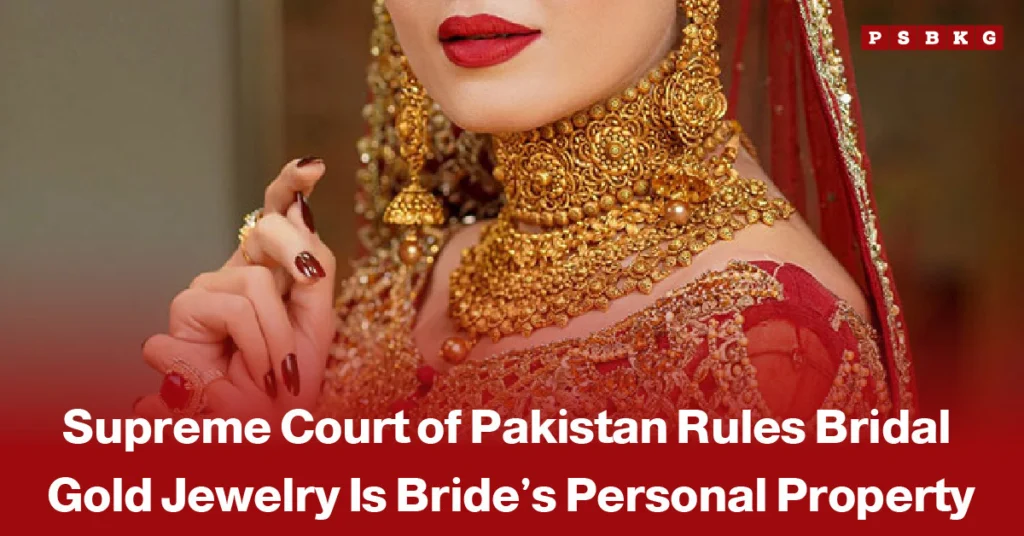
The Supreme Court of Pakistan has ruled that gold jewelry people give to a bride at the time of marriage becomes her personal property, and neither her husband nor her in-laws can claim it. The judgment provides greater legal clarity on a matter that has often led to family disputes, particularly during divorce and inheritance cases. Legal experts believe the ruling reinforces the financial rights of women and strengthens their protection under Pakistani law. Lawyers and women’s rights advocates have welcomed the decision. They say it highlights the importance of safeguarding a bride’s lawful ownership of gifts she receives during marriage.
Supreme Court Clarifies Ownership
In its ruling, the Supreme Court stated that bridal gold jewelry belongs exclusively to the bride if someone gave it to her as a gift at the time of marriage. The court also made it clear that no one can treat such jewelry as joint family property or claim it without legal grounds. The judgment settles an issue that has frequently appeared before courts, where disagreements over ownership have prolonged family disputes.
A Significant Decision for Women’s Rights
Legal experts believe the ruling is an important step toward protecting women’s financial rights. In many families, gold jewelry is considered one of the few valuable assets directly gifted to a bride, making its ownership an important legal matter. The court’s decision reinforces the principle that gifts presented to a woman during marriage remain her personal property unless there is clear evidence proving otherwise.
Why This Issue Often Reaches the Courts
Disputes over bridal jewelry commonly arise during divorce proceedings, family disagreements, or inheritance matters. In some cases, both sides claim ownership, leading to lengthy legal battles that can take years to resolve. By clearly defining the legal status of bridal jewelry, the Supreme Court has provided guidance that may help lower courts resolve similar cases more consistently in the future.
Legal Protection for Bridal Gifts
Under Pakistani law, gifts that people present specifically to a bride generally become her personal belongings. The latest judgment strengthens this legal position by reaffirming that these items remain under her ownership and that no one can take them away without lawful justification. Lawyers say the ruling may encourage greater awareness among families about the legal rights associated with marriage gifts.
Impact on Future Family Disputes
The decision is expected to influence future family court cases involving disputes over dowry items and bridal jewelry. Judges handling similar matters may rely on this ruling as an important legal reference when determining ownership. Experts believe the judgment could also discourage unnecessary litigation by providing a clearer legal interpretation of existing laws.
A Reminder of Women’s Legal Rights
The ruling has also renewed discussion about the importance of protecting women’s property rights in Pakistan. Legal professionals and social advocates say awareness of these rights is essential because many women are unaware of the legal protections available to them. Greater public understanding of such decisions can help ensure that women are able to exercise their rights with confidence when disputes arise.
Conclusion
The Supreme Court of Pakistan’s ruling that bridal gold jewelry is the bride’s personal property marks an important legal development. By confirming a woman’s ownership of gifts received during marriage, the judgment strengthens legal protections and provides much-needed clarity for future family disputes. The decision is expected to serve as a valuable precedent while reinforcing the importance of respecting women’s financial and property rights.