
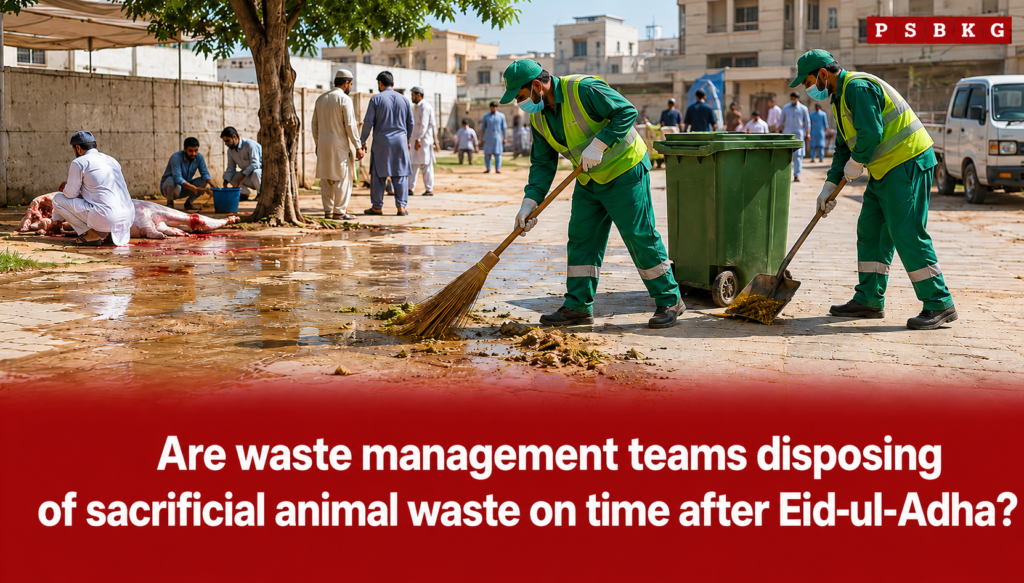
Eid-ul-Adha waste management requires municipal authorities across Pakistan to deploy large waste management teams to handle the heavy workload of disposing of sacrificial animal waste. However, performance often varies depending on the city, available resources, and the efficiency of the local administration.
Heavy Workload After Eid Sacrifices
Eid-ul-Adha generates a massive amount of waste within a short period due to the sacrifice of animals such as cows, goats, and sheep. This sudden surge puts significant pressure on sanitation departments, especially in densely populated urban areas. Waste includes animal remains, hides, offal, and blood, all of which require immediate and proper disposal to prevent health and environmental issues.
Municipal Teams Usually Act Quickly in Major Cities
Eid-ul-Adha waste management in major cities like Lahore, Karachi, Islamabad, and Faisalabad begins well before the festival. Municipal authorities deploy large waste management teams, implement special cleaning schedules, organize emergency response units, and establish dedicated collection points to ensure the timely disposal of sacrificial animal waste. In many cases, these teams clear primary roads and major residential areas within 24 to 48 hours, depending on coordination, available resources, and workforce capacity.
Challenges in Smaller Cities and Rural Areas
While big cities often see faster response times, smaller towns and rural areas sometimes face delays due to limited resources, fewer vehicles, and lower staffing levels. In such areas, waste collection may take longer, leading to temporary hygiene concerns until full clearance is completed.
Public Cooperation Plays a Key Role
Officials consistently emphasize that timely waste disposal is not only the responsibility of municipal teams but also depends on public cooperation. Proper wrapping, designated disposal points, and avoiding open dumping help teams work more efficiently. Where citizens follow guidelines, waste management becomes significantly faster and more organized.
Health and Environmental Concerns
Delays in disposing of sacrificial waste can create serious health risks, including foul odors, bacterial growth, and potential spread of disease. This is why rapid response after Eid is considered a public health priority. Authorities usually deploy disinfectant sprays and cleaning agents to sanitize affected areas once waste is removed.
Improvements in Recent Years
In recent years, many cities have improved their Eid cleanliness operations by introducing complaint helplines, mobile apps, and monitoring systems. These tools help authorities respond more quickly to reported issues. Despite improvements, experts say consistent investment in sanitation infrastructure is still needed.
Conclusion
Waste management teams do work actively to dispose of sacrificial animal waste on time after Eid-ul-Adha, especially in major cities. However, effectiveness varies by region, and timely cleanup depends on both administrative capacity and public cooperation.