
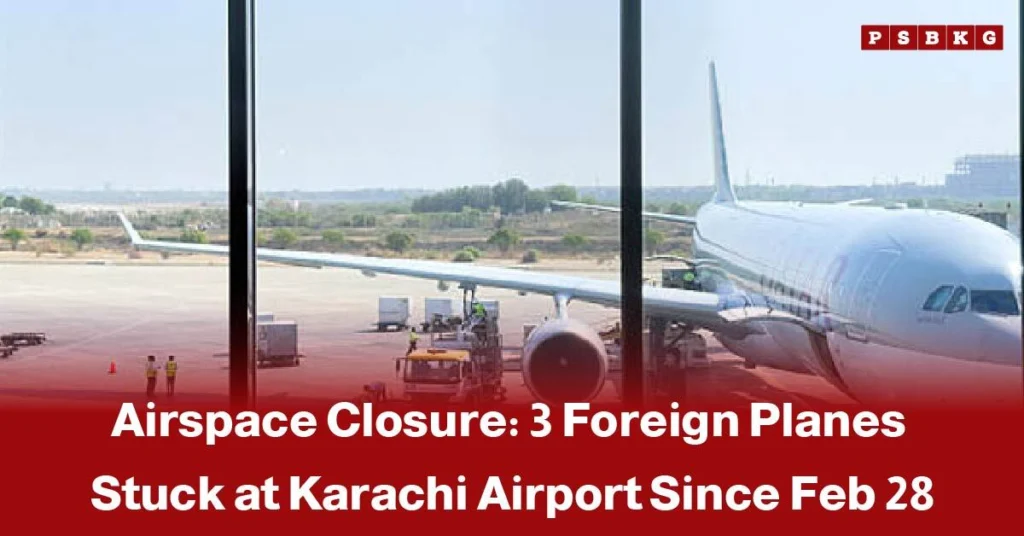
Since February 28, three foreign‑registered aircraft have been stranded at Jinnah International Airport, unable to take off due to the ongoing closure of Pakistan’s airspace. Airport authorities confirmed the situation, saying the aircraft are parked and awaiting clearance to depart. Crew members remain on board or nearby, while passengers, in some cases, have been transferred to terminals. The unusual accumulation of aircraft has caught the attention of travel professionals and frequent flyers alike. It highlights how sudden changes in air traffic policies can ripple through global flight operations.
What Caused the Closure
The closure of Pakistan’s airspace was imposed by aviation authorities earlier this month, following heightened security concerns after regional tensions escalated. Officials said the shutdown was a pre‑emptive safety measure to protect civilian and military aviation. Grounded flights, including these three foreign planes, became an immediate consequence. While commercial airlines have scrambled to adjust routes, diverting flights and adjusting schedules, the Karachi situation remains an unusual reminder of how geopolitical developments can translate into logistical headaches for global aviation.
How Airlines Are Responding
Airlines affected by the closure have tried to adapt as best they can. Some have rerouted flights around Pakistani airspace, adding distance and fuel costs. Others have extended layovers or canceled segments of service entirely. The three foreign planes stuck in Karachi represent a more visible disruption, because they physically cannot leave until the airspace reopens. Airline officials say they are in regular contact with airport and government authorities, seeking updates and planning next steps. For airlines, operational flexibility has become a key survival skill in an unpredictable region.
Lives on Hold
Passengers and crew on the stranded flights have been trying to make the best of an awkward situation. Some travelers, waiting for confirmation of departure dates, have expressed frustration and fatigue. Others have adapted to temporary accommodation arrangements near the airport. Crew members, meanwhile, face logistical and regulatory challenges, including rest periods and duty‑time limits. Aviation unions say such disruptions highlight the difficulty of running a global schedule when airspace closures happen unexpectedly.
Economic Impact of Disruptions
Broader economic fallout from the airspace closure extends beyond the stuck aircraft. Airlines incur higher fuel costs when taking longer detours. Freight shipments face delivery delays. Passengers may incur hotel or accommodation expenses. Tourism sectors can also feel the ripple effects. Industry analysts say even short closures in major regions can have a cascading impact on schedules, revenue, and customer confidence. Karachi’s hub status makes the disruption especially visible. The cumulative cost of reroutes and delays continues to be tallied by carriers.
What Authorities Are Saying
Officials from Pakistan’s aviation and transport ministries insist that safety is the priority. They have not confirmed when the airspace will reopen, but have indicated that conditions are being reviewed continuously. Aviation experts say authorities are balancing risk assessments with the goal of minimizing disruption. In the meantime, liaison teams are working with foreign carriers to manage logistics. Local airport officials are also coordinating passenger services and ground handling support. Clear communication, they say, is key to reducing uncertainty.
International Aviators Weigh In
International aviation bodies and airlines have issued statements urging swift resolution. They emphasize that predictable airspace operations are critical for global connectivity. Some analysts note that modern flight planning must account for geopolitical flashpoints more than ever before. Training and contingency planning are increasingly part of airline risk management strategies. In this case, the stuck planes at Karachi serve as a reminder of how rapidly normal operations can be upended. Airlines say they hope for rapid clarification so their schedules can stabilize.
Looking Ahead
Passengers, pilots, and airline managers are all watching for a signal that Pakistan’s airspace will reopen. The longer the closure continues, the more complex scheduling and crew coordination becomes. Authorities have indicated that reopening will depend on security reassessments. Meanwhile, travelers reroute their journeys, and airline staff adjust rosters and timelines. Global flight operators monitor the situation closely, knowing that even small changes in one region can affect schedules worldwide. For now, those three planes remain markers of disruption on the tarmac — stuck until skies are cleared again.