
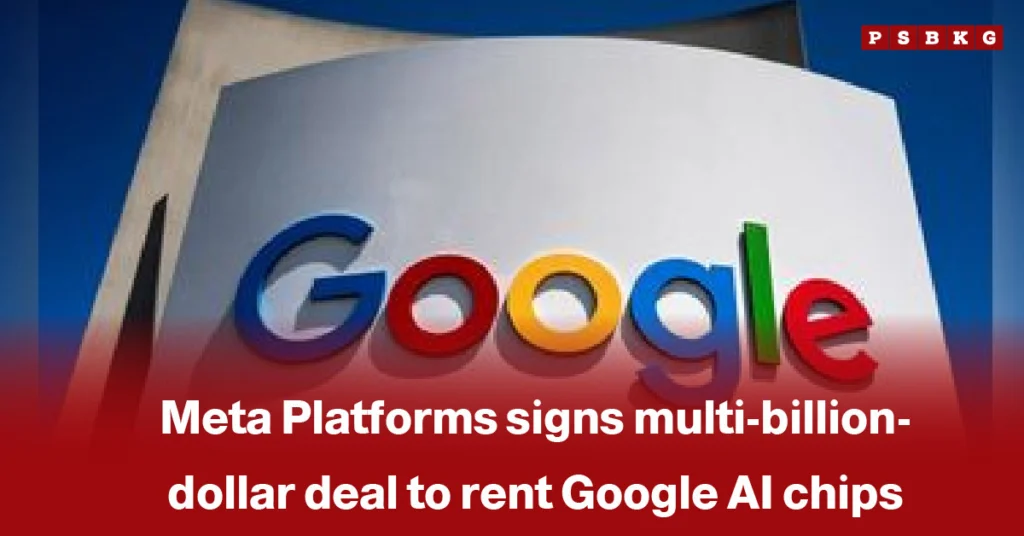
Latest News : Tech giant Meta Platforms has struck a multi‑billion‑dollar, multi‑year Meta Google AI chips deal, renting artificial intelligence chips from Google in a move that highlights how fierce the AI infrastructure race has become. According to industry reports, Meta will use Google’s Tensor Processing Units (TPUs) to power the development of its next generation of AI models. The Information first reported the deal, with confirmations from people familiar with the negotiations, though neither company offered official comment at the time.
Why This Deal Matters
What’s notable about the Meta Google AI chips deal is not just the size of the investment, worth billions over several years, but what it says about how top tech companies are approaching AI computing power. Meta already has chip supply deals with other hardware makers, but the move to rent Google’s proprietary silicon suggests that even the biggest players are looking for flexible ways to scale capacity without building everything in‑house. It also reflects the growing demand for faster and more efficient AI training infrastructure.
How It Fits Into the AI Arms Race
AI workloads are expanding rapidly, and companies need vast computing resources to develop and train large language models, vision systems, and other generative AI tools. For years, graphics processing units (GPUs), particularly from companies like Nvidia, have dominated this space. But Google’s TPUs have been gaining traction as an alternative, especially for cloud‑based AI work. Meta’s deal positions it to tap into that capacity without relying solely on one provider.
Diversification of AI Infrastructure
Meta’s strategy appears to be all about diversification. In the same period, the company has also signed large supply agreements with Advanced Micro Devices and Nvidia to secure other kinds of AI chips. These moves combined show that Meta isn’t betting everything on a single chip ecosystem, but rather mixing cloud rental, GPU purchases, and now TPU leases. Analysts say this could reduce supply bottlenecks and give Meta more leverage in future negotiations.
What Google Gains
For Google, the deal offers a new revenue stream for its AI hardware. TPUs were originally developed for internal use in Alphabet’s own AI efforts, but leasing them to external customers like Meta could help Google Cloud grow in a fiercely competitive market. The strategy fits with a broader push to turn proprietary AI technology into a business asset beyond search and advertising.
Industry Reaction and Market Impact
The announcement has stirred interest across the tech world. Observers say the deal could chip away at Nvidia’s dominance in AI hardware, especially if other large companies start following Meta’s model and exploring alternatives like TPUs. Market reactions have been mixed, with some investors welcoming diversification and others cautious about shifting away from established GPU ecosystems. In any case, the AI chip landscape is clearly evolving.
What Comes Next for Meta
Meta is reportedly in early discussions about possibly buying TPUs outright for some of its data centres in the future, though details remain uncertain. For now, the rental arrangement gives it immediate access to advanced AI compute power without the upfront cost of purchasing and managing hardware at scale. That flexibility could prove valuable as AI development accelerates and demand for compute continues to climb.
Why It Matters to Users and Developers
For everyday users, the Meta Google AI chips deal might seem distant or technical, but it has real implications for the pace of innovation in AI products people interact with, from chatbots to recommendation systems. Companies that secure cutting-edge compute resources can experiment faster and release new features sooner. For developers, it highlights how infrastructure partnerships are becoming just as strategic as product innovation itself.