
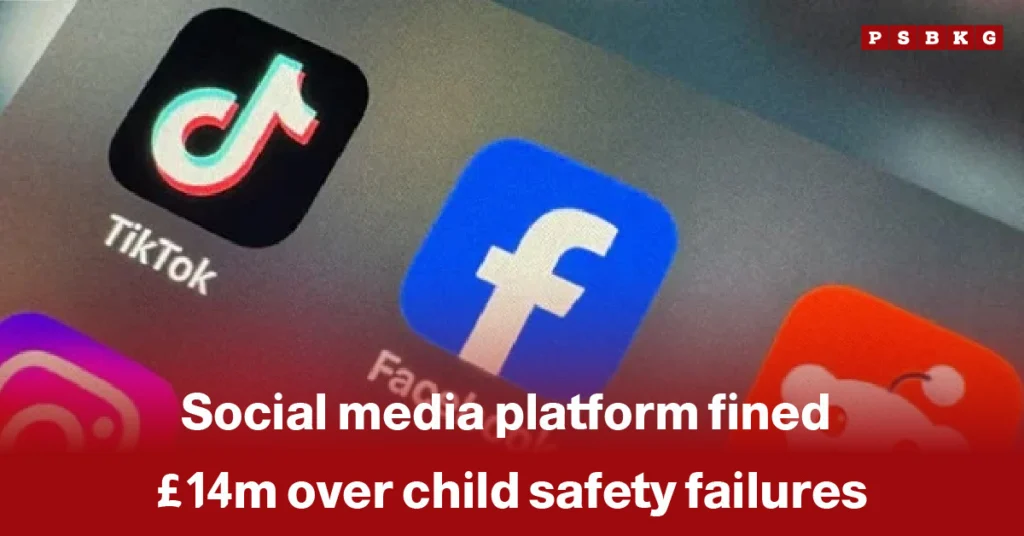
Latest News : A major social media company has been fined £14 million by regulators for failing to ensure social media child safety on its platform. The penalty comes amid growing concern about online safety and how young users are exposed to harmful content. Officials said the company did not do enough to prevent under‑age access or remove dangerous material in a timely way. The ruling has drawn attention from parents, educators, and digital rights groups, and it raises broader questions about how far tech firms must go to safeguard younger users. The fine is one of the largest to focus specifically on child protection issues.
What the Fine Was About
Regulators found that the social media platform repeatedly failed to meet safety standards designed to protect children. Investigations revealed that children were able to create accounts easily, encounter harmful content, and interact with strangers without sufficient oversight. Authorities concluded that the platform’s safeguards were inadequate and sometimes poorly enforced. The £14m fine reflects the severity of these lapses. Officials say tech companies must do more than pay lip‑service to safety; they have to build systems that actually work. Parents watching the news reacted with both relief and frustration.
Impact on Users and Parents
For many users — especially parents — the news confirmed long‑held concerns about online safety. Social media is woven into everyday life, and children’s presence on these platforms is widespread. While many families take steps at home to protect kids online, experts say platform responsibility is critical too. The fine sends a clear signal that regulators will hold companies accountable. However, some parents warned that penalties, while symbolic, may not change day‑to‑day realities for children online. Safety advocates argue that broad cultural change in the tech industry is necessary, not just fines.
Company Response
The social media platform in question responded to the fine by saying it takes child safety seriously and is reviewing the regulator’s findings. Company spokespeople acknowledged the challenges of moderating vast amounts of content around the clock. They said ongoing improvements are being made to age verification, content filtering, and reporting tools. Still, critics say past promises have often outpaced actual results. The debate now turns to whether the company’s planned changes will be sufficient or merely cosmetic. Regulators appear poised to watch closely in the coming months.
Broader Regulatory Trends
Child safety online has become a priority among regulators in multiple countries. Governments and watchdogs are increasingly scrutinizing tech platforms for how they handle harmful content, data privacy, and age verification. The £14m fine is part of a larger pattern of enforcement actions aimed at pushing social networks to improve standards. Some nations have introduced stringent laws with real teeth, including fines tied to revenue. Others are exploring mandatory safety audits or criminal liability for executives. The message from regulators seems consistent: protecting children online is not optional.
What Experts Recommend
Digital safety experts emphasize that social media child safety depends on platform design, not just written policies. It’s not enough to create rules, technology must enforce them. Age verification systems should be robust, content filtering proactive, and reporting mechanisms simple and effective. Advocates also call for better digital literacy education for children and parents. Knowing how to spot harmful behavior, report it, and step away matters as much as technical safeguards. The conversation around online safety continues to evolve, with input from educators, psychologists, and tech developers.
Public Reaction and Debate
News of the fine sparked reactions across social media, ironically enough. Some users cheered the penalty, seeing it as overdue accountability. Others worried that fines won’t make a difference unless platforms face serious operational or legal consequences for repeated failures. Commenters debated whether regulators are moving too slowly or not far enough. The collective conversation reflects growing societal concern about how children interact with digital spaces. Many voices called for proactive measures, not just retrospective penalties.
What Happens Next
The company now faces pressure to implement measurable changes that regulators will monitor, focusing on social media child safety. If improvements are not evident, further penalties could follow. Other platforms may also come under scrutiny as regulators seek to set industry‑wide benchmarks for protecting children online. Meanwhile, parents and educators are paying close attention to how these developments play out in real time. The next few months could prove to be a turning point in how online safety is regulated and enforced.