
Concerns Raised Over Imran Khan’s Health
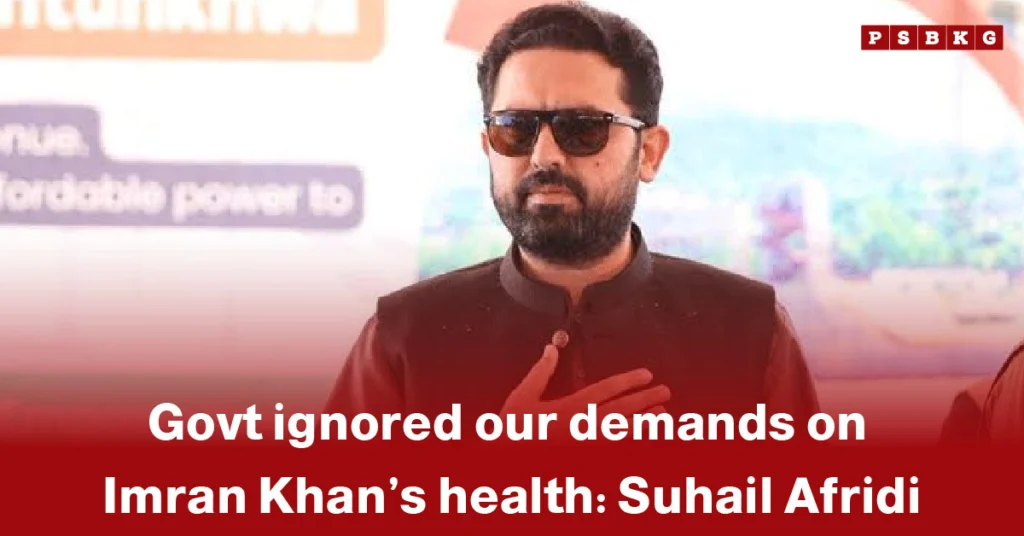
Latest News : Fresh concerns about the health of former prime minister Imran Khan have surfaced after political figure Suhail Afridi claimed that authorities ignored repeated demands regarding medical attention. The statement has once again drawn public focus to the issue of Khan’s well-being, which has been a matter of debate for months. Supporters argue that his health condition requires proper monitoring and transparency. The situation reflects the continuing political tension surrounding the former premier, whose legal and medical status remains closely watched by both followers and critics.
Claims of Ignored Requests
According to Suhail Afridi, several requests were made to the authorities seeking attention to Imran Khan’s health condition, but those appeals were not addressed. He suggested that concerns raised by party members and supporters were overlooked despite their seriousness. Afridi emphasized that access to medical care is a fundamental right and should not be influenced by political considerations. His remarks highlight growing frustration among those who believe the issue deserves urgent attention. The claims have intensified the political debate, prompting renewed calls for transparency regarding Khan’s health status.
Political Sensitivity of the Issue
The matter carries strong political significance because of Imran Khan health concerns and his influence in Pakistan’s political landscape. Even after leaving office, he remains a central figure with a large support base. Any development related to his health quickly becomes a national discussion. Analysts say such issues often reflect broader tensions between political groups and state institutions. Afridi’s statement is being viewed in this wider context, where concerns about individual welfare intersect with ongoing political disagreements. The situation illustrates how Imran Khan health concerns can take on national importance in a charged political environment.
Government’s Position and Silence
So far, the Government of Pakistan has not issued a detailed response to Afridi’s allegations. Officials generally maintain that legal and administrative procedures are being followed according to established rules. However, the absence of clear public communication has contributed to speculation and uncertainty. Critics argue that transparency could help address public concerns and reduce tension. Supporters of the government, on the other hand, insist that institutions are functioning within the law. The lack of a definitive statement continues to fuel discussion across political circles.
Public Reaction and Debate
Public response to the issue has been mixed, reflecting the country’s polarized political climate. Supporters of Imran Khan have expressed worry about his health and called for independent medical assessments. They argue that timely medical care is a basic human right that should not be delayed. Meanwhile, others believe the issue is being politicized for strategic purposes. Social media platforms have become a space for intense debate, with users sharing opinions, updates, and demands for clarity. The reaction highlights how closely citizens follow developments involving prominent political leaders.
Human Rights and Medical Access
Beyond politics, the situation raises broader questions about access to healthcare and human rights. Legal experts note that every individual, regardless of status, has the right to appropriate medical treatment. International standards emphasize transparency and timely care for individuals in custody or under state supervision. Afridi’s remarks have therefore sparked discussion not only about one individual’s condition but also about institutional responsibilities. The debate underscores the importance of ensuring that health concerns are addressed promptly and fairly, without delay or discrimination.
Impact on Political Climate
The issue also carries implications for the wider political atmosphere in the country. Health-related concerns involving major political figures often influence public sentiment and political narratives. Some observers believe the controversy could deepen divisions between rival political groups. Others suggest it may encourage dialogue about governance, accountability, and institutional responsibility. The ongoing discussion shows how individual cases can shape national discourse, particularly when they involve influential leaders and sensitive political circumstances.
Calls for Transparency and Dialogue
As the debate continues, there are growing calls for transparency and open communication from all sides. Political leaders, analysts, and civil society members emphasize the need for clarity regarding Imran Khan’s health condition. They argue that timely information and proper medical evaluation could help reduce uncertainty and restore public confidence. For many citizens, the hope is for a resolution that prioritizes health, fairness, and institutional credibility. The situation remains closely monitored, with further developments expected in the coming days.