
Cricket Meets Diplomacy Again
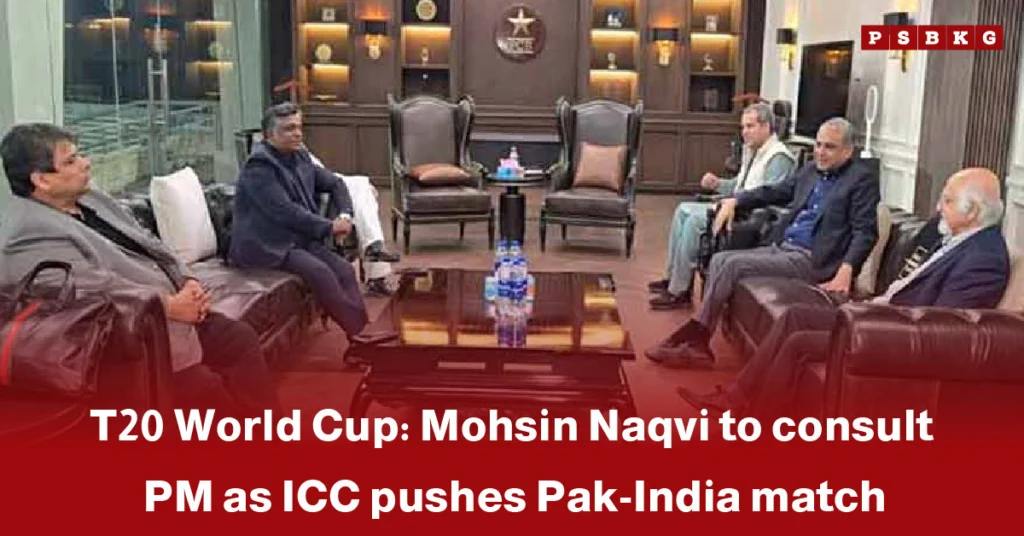
Latest News: Cricket between Pakistan and India has never been just about sport. Every match carries history, emotion, and political weight. As the T20 World Cup approaches, that familiar tension has returned. This time, the spotlight is on a possible Pakistan India World Cup clash, with the International Cricket Council reportedly pushing for the high-profile encounter. Pakistan Cricket Board Chairman Mohsin Naqvi plans to consult Prime Minister Shehbaz Sharif before taking any final position. This development shows how cricket decisions, especially involving India, rarely stay confined to boardrooms.
ICC’s Interest in a Big Match
From the ICC’s perspective, a Pakistan India World Cup match draws the biggest attention in the tournament. It attracts massive global viewership, advertising revenue, and media coverage. Broadcasters plan their schedules around it, sponsors expect it, and fans across continents eagerly await it. For the ICC, the fixture is not just desirable—it drives commercial power. This pressure often forces cricket boards into difficult positions, especially when political realities interfere. The current situation reflects that same imbalance, with commercial interests pushing forward while diplomatic sensitivities demand caution.
Mohsin Naqvi’s Careful Approach
Mohsin Naqvi’s decision to consult the Prime Minister highlights the seriousness of a potential Pakistan India World Cup clash. It shows that the PCB does not want to act unilaterally on an issue with broader implications. By consulting the country’s top political leadership, Naqvi ensures alignment with national policy and gains institutional support. He must balance cricketing responsibilities with political awareness, especially while regional relations remain fragile. This consultation also reflects a move toward transparency, avoiding rushed decisions that could spark controversy later.
Government’s Role in Cricket Decisions
In Pakistan, major cricketing decisions involving India often require government input, especially for a Pakistan India World Cup match. This is not unusual. Past tours, hosting rights, and bilateral series have all followed similar paths. The government weighs public sentiment, diplomatic context, and security concerns before signaling approval or hesitation. For the Prime Minister, the consultation represents more than a sporting matter. It touches national interest, public perception, and international optics. Any stance will likely balance cricket diplomacy with broader policy considerations.
Fans Caught Between Hope and Reality
For fans, the possibility of a Pakistan India match sparks excitement and anxiety at the same time. Many want to see the teams compete, believing cricket should rise above politics. Others feel unresolved issues cannot be ignored so easily. Social media reflects this divide clearly, with some calling for engagement through sport and others urging caution. Fans understand the magnitude of the match, but they also recognize the complexities involved. This emotional tug of war is a familiar part of every major tournament involving the two rivals.
A Tournament With Bigger Stakes
The T20 World Cup itself carries high expectations. Teams arrive with preparation, pressure, and global attention. Adding a Pakistan India match raises the stakes for everyone involved. Security planning intensifies, media scrutiny increases, and every decision is analyzed closely. For the ICC, the match represents a centerpiece event. For Pakistan, it becomes a test of decision making under pressure. The consultation process suggests that the PCB is aware of these stakes and wants to move cautiously rather than reactively.
What Lies Ahead
As discussions continue, clarity is expected once consultations conclude. Whether the match proceeds or faces complications, the situation reinforces a familiar truth. Cricket between Pakistan and India exists at the intersection of sport, politics, and public emotion. Mohsin Naqvi’s engagement with the Prime Minister reflects that reality. It shows that even in global tournaments, cricket decisions are rarely simple. Fans will watch closely, not just for the outcome on the field, but for the decision itself, which may shape the tournament’s narrative long before the first ball is bowled.