
A Clear Message After the Festivities
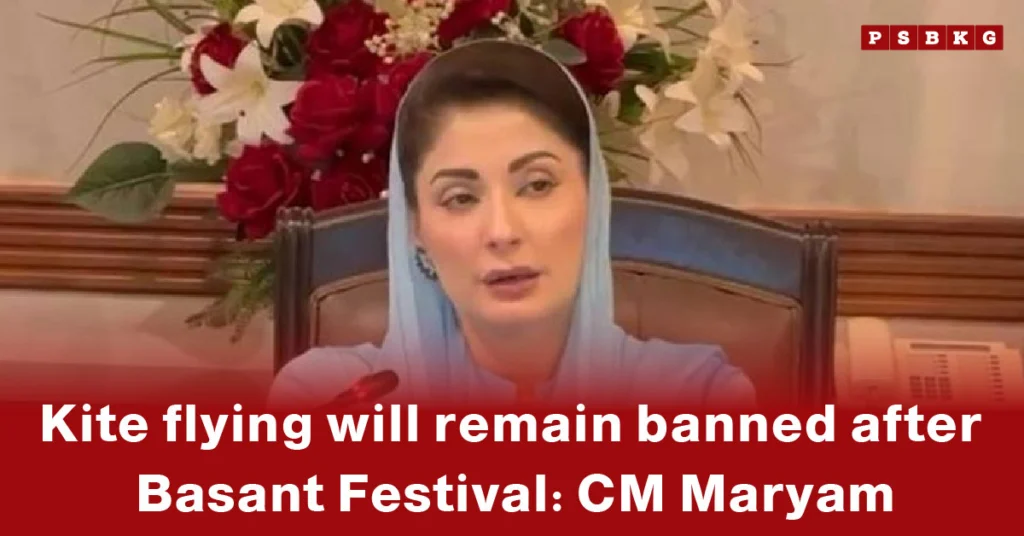
Latest News: As Basant celebrations draw to a close, the Punjab government has sent a clear signal about what comes next. Chief Minister Maryam Nawaz stated that authorities will continue enforcing the kite flying ban after Basant. The announcement reminds residents that while cultural moments are acknowledged, public safety comes first. Many residents expected this statement, as authorities allow limited celebration space each year but then strictly enforce the ban once festivities end. This time, the message came directly, leaving little room for confusion about what people can and cannot do.
Safety Concerns Behind the Decision
The kite flying ban after Basant stems from long-standing safety concerns. Over the years, sharp and chemically coated strings have caused serious injuries and even fatalities. Pedestrians, motorcyclists, and children remain particularly vulnerable. Despite repeated warnings and restrictions, people still use dangerous materials during peak seasons. CM Maryam Nawaz stressed that protecting lives cannot take a backseat to entertainment. Her remarks reflected the government’s stance that celebrations should not turn into tragedy, especially when the risks are preventable.
A Festival With Limits
Basant has always balanced tradition and regulation. While many celebrate its joy, color, and community, authorities focus on control and safety. This year followed a familiar pattern: officials allowed limited kite flying during festival days, then strictly enforced the kite flying ban after Basant. They argue that flying kites beyond a controlled window significantly increases risks. Crowded skies, uncontrolled competition, and hazardous strings make monitoring difficult. The post-festival ban helps authorities restore order before incidents escalate.
Public Reaction and Mixed Emotions
The kite flying ban after Basant has drawn mixed reactions from the public. Some residents support the decision, pointing to past accidents and the need for stronger enforcement. Others feel disappointed, seeing the ban as another restriction on cultural expression. For kite enthusiasts, the lively rooftops fall silent almost immediately once Basant ends. Yet even among critics, many understand why authorities imposed the ban. Memories of past injuries and losses continue to shape public responses to such announcements.
Enforcement and Accountability
CM Maryam’s statement also placed responsibility on law enforcement agencies. She directed authorities to ensure that the ban is implemented strictly, without selective enforcement. Illegal manufacturing, sale, and use of kite strings are expected to face action. This emphasis on accountability reflects a shift toward consistency. In previous years, enforcement was often criticized for being uneven. This time, the government appears intent on signaling seriousness, aiming to prevent the casual continuation of kite flying once celebrations officially end.
Culture Versus Public Interest
The debate around kite flying highlights a broader tension between preserving culture and ensuring public safety. Traditions evolve, especially when they conflict with modern realities. Urban density, traffic, and public movement have changed significantly over time. What once felt harmless now carries greater risk. The government’s stance suggests that cultural practices must adapt rather than remain fixed. Celebration, officials argue, should not come at the cost of human life. This framing positions the ban as a protective measure rather than a cultural rejection.
What Comes After Basant
As Lahore and other cities return to routine, the ban marks a shift back to normalcy. Streets clear, rooftops quiet, and enforcement teams remain alert. The Basant season leaves behind memories, economic activity, and also lessons. CM Maryam’s statement reinforces the idea that festivities have boundaries. The challenge moving forward will be finding ways to honor tradition without repeating past mistakes. For now, the message is firm. Kite flying ends with Basant, and safety takes precedence over sentiment.