
Ramadan’s Arrival Anticipated
Latest News: The first day of Ramadan Pakistan always brings excitement, reflection, and preparation across the country. This year, the Meteorology Department has stepped in with its forecast, helping families plan the holy month ahead. People are already thinking about dates for suhoor and iftar, community prayers, and arranging their schedules for fasting. Markets are slowly getting busier, with essentials like dates, flour, and sugar appearing on shelves. The announcement of the first day gives structure to what is already a spiritually significant period, and communities across the country are responding with both anticipation and organization.
Meteorology Department’s Role
The Pakistan Meteorology Department plays a quiet but important role each year in determining the first day of Ramadan Pakistan. Their predictions are based on astronomical calculations, moon sightings, and weather patterns. For a country where the lunar calendar determines the timing of Ramadan, these forecasts are crucial. Families rely on them to plan fasting, schools and offices take note for timings, and mosques schedule prayers accordingly. The announcement may seem technical, but its impact is deeply social. It bridges science and faith, helping millions synchronize their daily routines with the lunar calendar.
Preparing for Fasting
With the first day of Ramadan Pakistan predicted, households begin practical preparations. Kitchens are stocked with ingredients for suhoor and iftar, recipes are planned, and older generations pass down traditions for Ramadan. Markets start showing long queues, but the atmosphere is celebratory rather than chaotic. Families discuss how to balance work, school, and fasting, and communities coordinate charity and donation drives. The prediction of the first day allows a sense of readiness that helps people focus on the spiritual aspects rather than worry about logistics.
Moon Sighting and Community Spirit
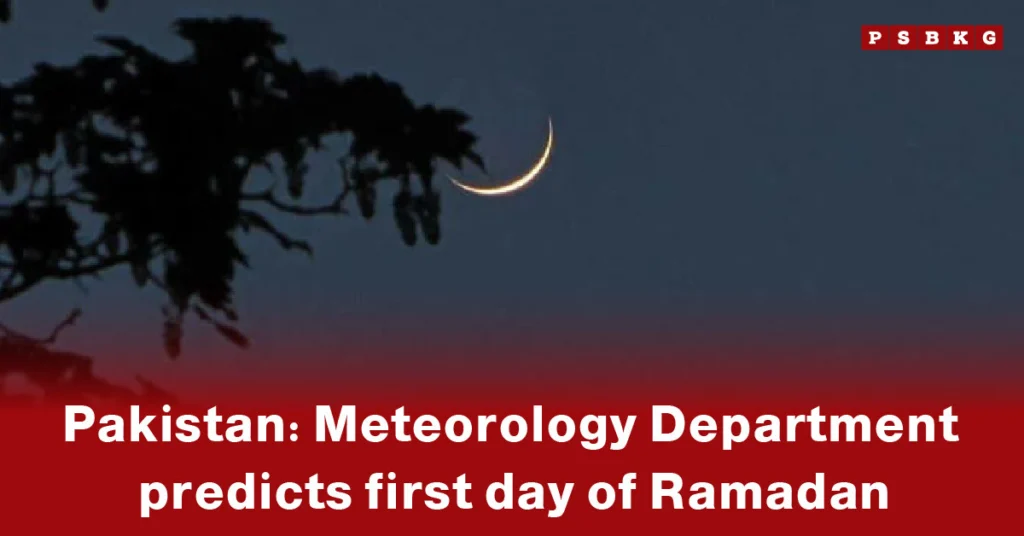
Even with meteorological predictions, moon sighting remains central to determining the first day of Ramadan Pakistan. Communities often gather at mosques, rooftops, or open fields to spot the crescent moon. These small rituals strengthen social bonds, providing moments of togetherness. Children watch with curiosity, elders observe with care, and prayers are said collectively. While the department’s forecast provides certainty for planning, the actual sighting keeps tradition alive. It is a beautiful balance between scientific guidance and cultural practice, uniting generations in shared observance.
Impact on Work and Daily Life
The prediction of the first day of Ramadan Pakistan also affects broader schedules. Offices and schools adjust timings to accommodate fasting hours, particularly for long summer days. Commuters and workers plan meals and rest accordingly. Businesses, especially in the food and hospitality sectors, begin catering for special Ramadan needs. The announcement triggers a ripple effect across daily life, reminding everyone that Ramadan is not only a spiritual journey but also a social and logistical challenge. Preparation makes it manageable and ensures that the focus remains on devotion.
Reflections Ahead
As the first day of Ramadan Pakistan approaches, there is a sense of quiet excitement. Ramadan brings with it fasting, prayer, charity, and reflection. People think about self-discipline, community service, and spiritual growth. The meteorology forecast may seem like a small technical detail, but it provides a shared anchor for a nation observing the month together. Across cities and villages, households start their routines, children learn about fasting, and adults prepare for long days. The prediction helps everyone step into Ramadan with a sense of order and readiness.
Ramadan in the Modern Era
Modern tools like meteorology forecasts, apps, and social media make Ramadan easier to organize than ever before. Families can plan meals, mosques can schedule taraweeh prayers, and charities can coordinate donation drives in advance. Yet, despite modernization, the essence remains the same. Moon sightings, prayers, family gatherings, and spiritual reflection continue to define the month. Science and tradition coexist, guiding Pakistanis to observe Ramadan meaningfully, and allowing communities to navigate both modern life and age old customs without losing the spirit of the month.