
Kashmiris Observe Black Day Globally
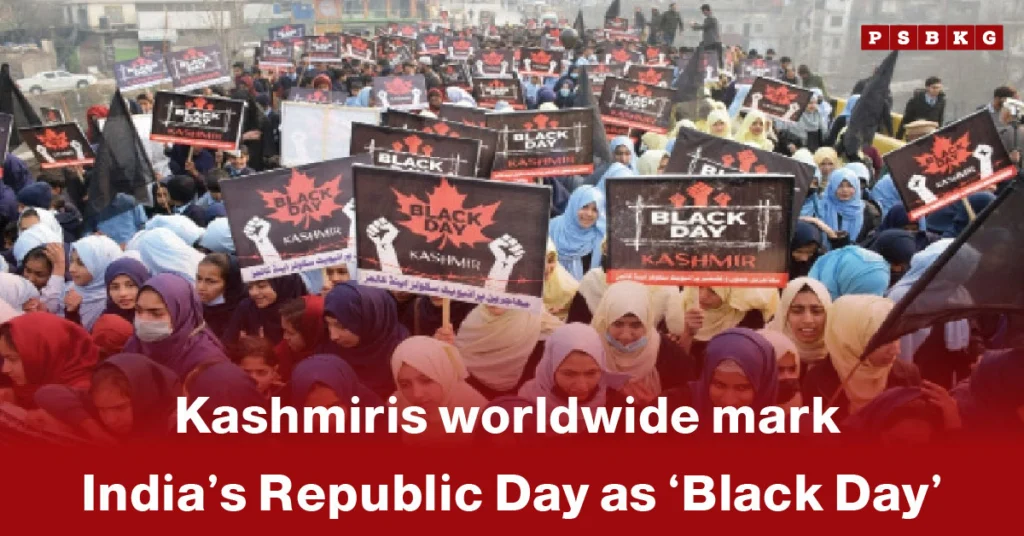
Latest News: Kashmiris mark Black Day across the world to protest ongoing oppression in Indian Illegally Occupied Jammu and Kashmir (IIOJK). Demonstrators hold rallies, organize protests, and display symbolic actions in various countries to draw international attention to the Kashmir issue. Participants carry black flags and banners, showing solidarity with the people of Kashmir. They reject India’s constitutional claims over the disputed territory. Protesters stress that the day represents grief rather than celebration for Kashmiris.
Protests Held in Major World Cities
Kashmiris mark Black Day with protests in major cities including London, Washington, Brussels, and Islamabad. Kashmiris and human rights activists gather outside Indian embassies and prominent public spaces. Demonstrators chant slogans demanding justice, freedom, and the right to self-determination for Kashmiris. Speakers at the rallies highlight alleged human rights violations in the region. The events remain peaceful but emotionally charged, showing deep frustration and pain among the Kashmiri diaspora. Organizers say the protests aim to keep the Kashmir issue alive internationally.
Rejection of Indian Constitution in Kashmir
Kashmiris mark Black Day as protest leaders strongly reject India’s constitution in Jammu and Kashmir. They say India’s Republic Day holds no significance for Kashmiris who have long fought for their political rights. Speakers argue that constitutional changes imposed by India violate international resolutions and remain illegal. They emphasize that Kashmir remains a disputed territory under United Nations resolutions. Protesters insist that no unilateral decision can change the region’s disputed status. Demonstrations convey this message consistently across all locations.
Voices Against Human Rights Violations
Kashmiris mark Black Day to highlight alleged human rights abuses in Indian-administered Kashmir. Activists accuse Indian forces of excessive use of force, arbitrary detentions, and restrictions on freedom of expression. Protesters carry placards calling for international investigations and accountability. Speakers urge global human rights organizations to take immediate notice. They report that curfews, communication blackouts, and heavy military presence severely impact daily life in the region. The protests aim to amplify the voices of those living under restrictions.
Support from Political and Social Groups
Kashmiris mark Black Day as political leaders, civil society members, and advocacy groups express support for the observance. They condemn what they call India’s actions in Kashmir. Leaders stress the need for peaceful resolution through dialogue and international mediation. Some groups call on the United Nations to take a more active role in resolving the long-standing dispute. Solidarity messages spread on social media, showing support for Kashmiris worldwide. The issue continues to gain attention across multiple platforms.
Pakistan Reaffirms Support for Kashmir
In Pakistan, Kashmiris mark Black Day as political leaders and government officials reaffirm their support for the Kashmiri people. Statements emphasize Pakistan’s commitment to raising the Kashmir issue at international forums. Leaders reiterate that Kashmiris have the right to decide their future through a free and fair plebiscite. Rallies and seminars educate the public about the Kashmir cause. Officials urge the international community to ensure implementation of UN resolutions. Pakistan’s stance remains firm and consistent with its long-held position.
Youth and Diaspora Participation
Young Kashmiris and members of the diaspora help Kashmiris mark Black Day by organizing and participating in protests. Many use digital platforms to spread awareness and share real-time updates from demonstrations. Social media campaigns with hashtags related to Black Day trend in several regions. Youth leaders say it is important to keep the narrative alive for future generations. Their participation highlights growing global awareness of the issue. Organizers praise the youth for their energy and commitment.
Call for International Attention
Kashmiris mark Black Day as protesters urge the global community to move beyond statements and take meaningful action. They call for international pressure on India to respect human rights and engage in dialogue. Speakers stress that silence from world powers only prolongs suffering in the region. Activists demand access for international media and observers in Kashmir. They argue that transparency is essential for justice. The protests aim to remind the world that the Kashmir issue remains unresolved.
India’s Republic Day Viewed as Symbol of Pain
Kashmiris mark Black Day to show that India’s Republic Day symbolizes decades of struggle rather than national pride. Protesters say the day reflects continued denial of rights and freedoms in Kashmir. They express sorrow for lives lost and families affected by the conflict. Black flags and moments of silence symbolize mourning. The message is clear: celebrations cannot erase the realities faced by Kashmiris. The observance reflects collective grief and resistance.
Conclusion
Kashmiris worldwide marked India’s Republic Day as Black Day to highlight their ongoing struggle and demand justice. Through peaceful protests and global demonstrations, they sought to draw attention to alleged human rights violations and political repression in Kashmir. The observance served as a reminder that the Kashmir dispute remains unresolved despite the passage of time. As voices grow louder across the world, Kashmiris continue to seek international support for their right to self-determination. The Black Day protests reinforced their resolve to keep the issue alive until a fair and lasting solution is achieved.