

New AI Device Restores Voice for Stroke Patients
A new AI-powered collar has shown promising results in helping stroke patients speak again. The device uses advanced technology to interpret brain signals and convert them into speech. Many stroke survivors struggle with speech difficulties due to damage in brain areas controlling language. This new innovation aims to restore communication for those affected. Researchers say the collar could significantly improve the quality of life for patients and their families. Early trials have raised hope that speech loss may become easier to treat.
How the AI Collar Works
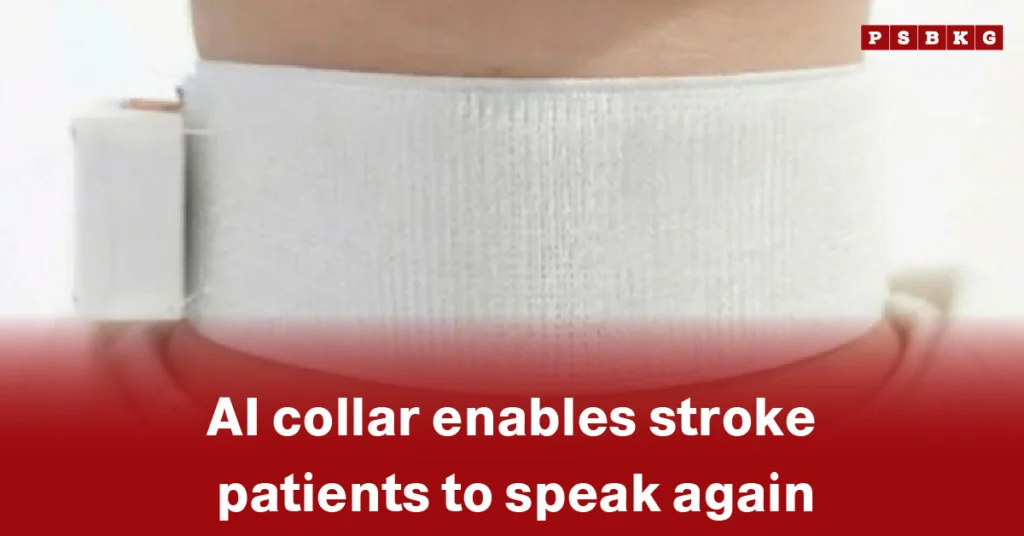
The AI collar is designed to read subtle muscle movements and nerve signals around the throat and neck. These signals are then processed by an artificial intelligence system that translates them into words. The device is non-invasive, meaning it does not require surgery or implants. Patients wear the collar like a regular accessory, and it can detect attempts to speak even when the vocal cords are not working properly. This technology bridges the gap between the patient’s intention to speak and actual voice production.
Successful Early Trials
Researchers have conducted initial trials with stroke patients who suffered from speech impairments. The results showed that the AI collar could accurately predict and generate spoken words. Patients were able to communicate basic sentences and express their needs more clearly. The technology also improved confidence and emotional well-being among participants. Experts believe that continued development could enhance the device’s accuracy and vocabulary range. These early successes have encouraged further testing.
Benefits Beyond Speech
Apart from restoring voice, the AI collar may also support emotional recovery for patients. Being unable to speak can lead to frustration, depression, and social isolation. The device allows patients to reconnect with family and participate in daily conversations again. This improvement can boost mental health and overall rehabilitation outcomes. Caregivers also benefit from easier communication, reducing misunderstandings and stress. The AI collar may therefore become an important tool in stroke recovery programs.
Expert Opinions on the Technology
Medical experts have praised the innovation but also emphasized the need for more research. They said that while the technology is promising, it must be tested on larger groups of patients to ensure reliability. Experts also highlighted the importance of integrating the device into existing rehabilitation therapies. Speech therapists can work alongside the AI collar to help patients regain language skills. This combined approach could deliver better long-term results for stroke survivors.
Possible Challenges and Limitations
Despite its potential, the AI collar faces challenges in real-world use. The device needs to be trained to understand each patient’s unique muscle patterns. This can take time and may require regular calibration. Some patients may also find the collar uncomfortable or difficult to wear for long periods. Additionally, the technology must be affordable to reach a wider population. Researchers are working to improve the device’s design and reduce costs. These challenges must be addressed before the AI collar becomes widely available.
Future Developments and Upgrades
Scientists are working on enhancing the collar’s capabilities to support more complex speech. Future versions may include larger vocabulary, faster response times, and better accuracy. Developers are also exploring the possibility of integrating the device with smartphones and computers for easier use. This would allow patients to communicate through text messages and social media. The technology could also be adapted for patients with other speech disorders, such as ALS or vocal cord paralysis.
Impact on Stroke Rehabilitation
The AI collar may change the way stroke rehabilitation is approached in the future. By enabling speech, it can improve patient motivation and participation in therapy. Speech therapists can use the device to track progress and adjust treatment plans. Hospitals and rehabilitation centers may adopt the technology as part of their programs. This could lead to better recovery outcomes and reduced long-term disability. Experts believe the device has the potential to transform stroke care.
Patient Stories and Reactions
Stroke patients who tested the AI collar shared emotional responses after using the device. Many expressed joy at being able to speak to loved ones again. Some said the collar gave them a sense of independence and hope. Family members described the moment as life-changing, as they could finally understand the patient’s needs and feelings. These personal stories highlight the device’s real impact beyond medical statistics. They also emphasize the need for continued innovation in stroke care.
Conclusion
The AI collar represents a major breakthrough in helping stroke patients regain speech. While the technology is still in early stages, it offers hope for millions suffering from speech impairment. Researchers continue to improve the device, aiming for wider use and better accuracy. With further development and support, the AI collar may become a key tool in stroke rehabilitation. The innovation shows how artificial intelligence can create real-life solutions for medical challenges, giving patients a new chance to communicate and live with dignity.