
A Shift in Political Mood
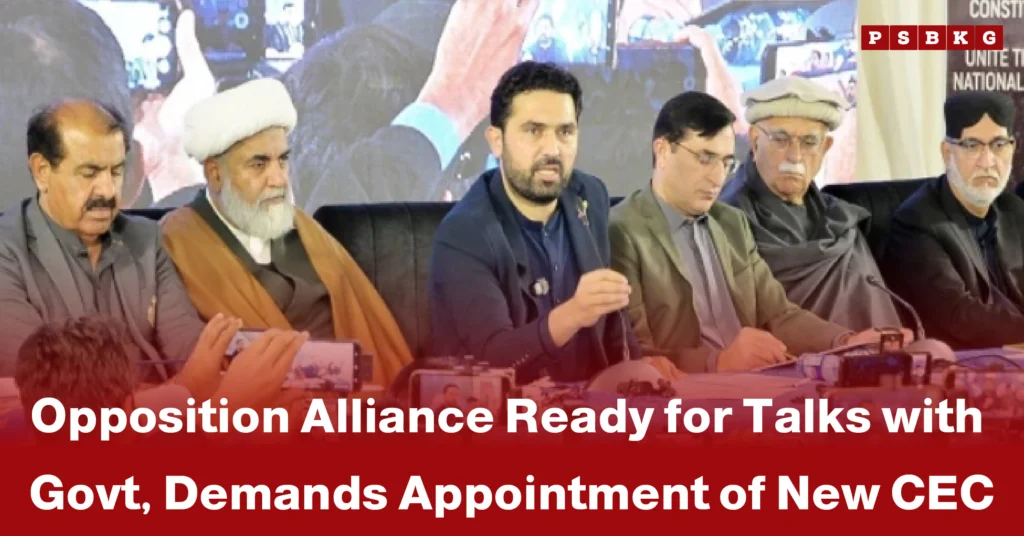
Latest News: Pakistan’s opposition alliance signals readiness to engage in talks with the government, marking a noticeable shift in the political climate. After weeks of confrontation and strong rhetoric, opposition leaders say they can enter dialogue if the government meets certain conditions. At the center of their demand, they insist on appointing a new Chief Election Commissioner, a position they consider critical for restoring political trust.
Demand for a New Election Chief
The opposition alliance says the credibility of future elections depends on appointing a neutral and widely accepted Chief Election Commissioner. Leaders argue that without a new appointment, doubts over electoral transparency will persist. They stress that electoral reforms cannot move forward unless an impartial authority oversees the process. The opposition presents this demand as a prerequisite rather than a negotiation point in talks with the government.
Government’s Initial Response
The government acknowledges the opposition alliance’s willingness to talk but remains cautious. Officials say they want dialogue to remain unconditional and focused on national stability. While they have not outright rejected the demand for a new CEC, they emphasize that they will follow constitutional procedures. Government sources indicate that they will make any decisions regarding appointments within legal boundaries, not under political pressure, during opposition alliance talks with the government.
Why the CEC Issue Matters
The Chief Election Commissioner’s role has long been sensitive in Pakistan’s politics. Past elections often sparked disputes and prolonged unrest. Analysts say the opposition alliance’s focus on the CEC reflects deeper concerns about electoral fairness. For many political parties, trusting election management directly affects their acceptance of results and the continuity of democracy, a point they stress during opposition alliance talks with the government.
Opposition Unity on Display
The announcement also highlights rare unity among opposition parties. Despite ideological differences, alliance members align on the issue of electoral reform. Leaders say this consensus strengthens their negotiating position and gives them leverage during opposition alliance talks with the government. Political observers note that maintaining unity will be crucial, as internal divisions have weakened opposition efforts in the past.
Public Reaction and Expectations
Public response to the development remains mixed. Some citizens welcome the possibility of dialogue, hoping it will reduce political tension. Others remain skeptical, recalling previous talks that failed to produce results. Many people focus more on economic challenges and urge political leaders to prioritize governance over prolonged disputes during opposition alliance talks with the government.
Economic Context Adds Pressure
The timing of the proposed talks comes amid economic strain. Inflation, rising utility costs, and unemployment continue to affect daily life. Analysts argue that political uncertainty worsens economic instability. A successful dialogue during opposition alliance talks with the government could create a more predictable environment, encouraging investment and policy continuity. Failure, however, may deepen public frustration.
Role of Institutions and Constitution
Constitutional experts point out that appointing a Chief Election Commissioner requires consultation and consensus. Institutions will play a key role if opposition alliance talks with the government move forward. The process must balance political agreement with legal requirements. Experts warn that any shortcut could trigger further disputes rather than achieve resolution.
Challenges Ahead
Despite their willingness to talk, significant hurdles remain. Trust between the government and opposition remains low. Past negotiations collapsed due to rigid positions and lack of follow-through. Analysts say both sides will need flexibility and patience to make progress during opposition alliance talks with the government. Without compromise, the talks risk becoming another missed opportunity.
What This Means for Democracy
If dialogue succeeds, it could strengthen democratic norms and improve electoral credibility. A mutually agreed appointment of a new CEC during opposition alliance talks with the government may reduce tensions ahead of future elections. However, failure could reinforce political polarization. The outcome will likely shape Pakistan’s political trajectory in the coming months.
Conclusion
The opposition alliance’s readiness for talks, coupled with its demand for a new Chief Election Commissioner, has reopened the door to dialogue. While challenges remain, the move offers a chance to address long-standing concerns over electoral transparency. As both sides weigh their options, the nation watches closely. Whether this moment leads to meaningful progress or another stalemate depends on the willingness of leaders to put national interest above political rivalry.