
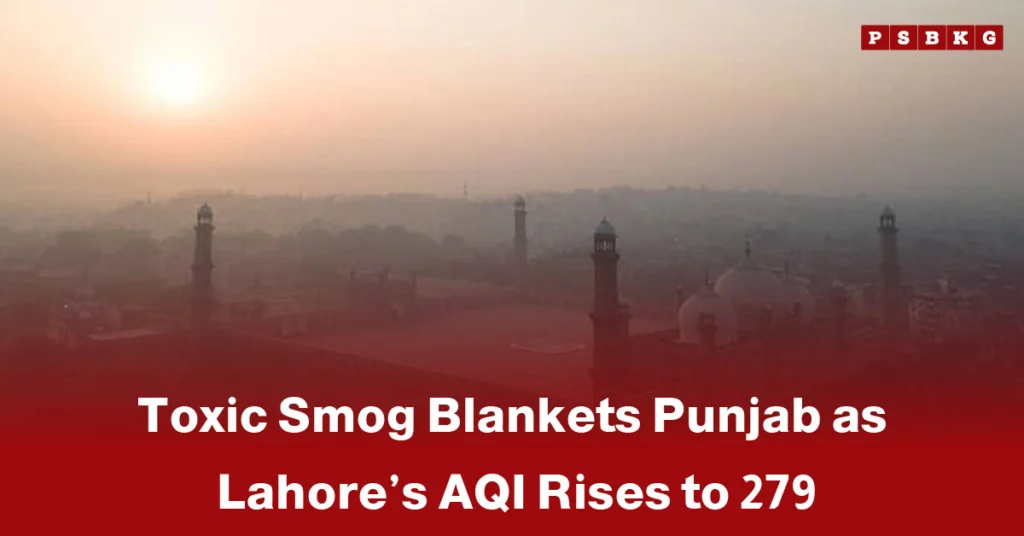
A Hazy Morning in Lahore
Latest News: Lahore woke up under a thick, grey haze as Lahore smog pollution reached hazardous levels. Visibility remained low, cars moved cautiously, and pedestrians covered their faces while the Air Quality Index (AQI) hit 279. Residents described the air as heavy and suffocating, with an acrid smell lingering in every street. For many, it posed a serious health risk. People with asthma, children, and older adults struggled to breathe comfortably, while joggers and office-goers debated whether stepping outside was worth the risk. The smog is not new to Lahore; winters bring it every year, but its intensity seems to increase. Weather patterns, urban congestion, and industrial activity combine to create the haze. This year, it arrived earlier and thicker than usual, prompting discussions on whether current measures effectively protect public health.
The Usual Suspects
Experts say Lahore smog pollution comes from multiple sources. Exhaust from cars and motorbikes contributes heavily, especially with the city’s rising number of vehicles. Factories on the outskirts release smoke and particulate matter that drifts over the city. Construction dust adds another layer. Seasonal factors also worsen the problem. During winter, colder temperatures trap pollutants close to the ground in a phenomenon called temperature inversion. Smoke, dust, and chemicals accumulate instead of dispersing, creating the dense layer of smog people see and feel. Farmers burning crop residues in nearby regions further aggravate the situation. Together, these sources create a perfect storm of pollution. Officials have introduced measures like monitoring air quality, regulating factory emissions, and temporarily banning open burning, but uneven enforcement means the city continues to struggle with poor air quality year after year.
Health Implications
Medical professionals are raising alarms about Lahore smog pollution. Hospitals report more patients with respiratory problems, wheezing, and eye irritation. Chronic exposure increases the risk of asthma, bronchitis, and even heart conditions. Children and older adults remain particularly vulnerable. Experts advise limiting outdoor activity, wearing masks when going outside, and using air purifiers indoors. Drinking plenty of water and avoiding smoke-filled areas also helps. While these tips provide short-term relief, the long-term challenge lies in reducing pollution at its source. Without serious interventions, residents face recurring health hazards each winter.
Daily Life in a Smoggy City
For ordinary people, life continues under Lahore smog pollution. Morning walks are cut short, traffic slows, and street vendors cover their food with plastic sheets. Children waiting for school buses cough and squint against the hazy sun. Some businesses ask employees to work from home, while others continue regardless of air quality. The smog also affects mood and perception. A city under haze feels heavier, darker, and less welcoming. People report feeling tired more quickly, and outdoor social activities decline. This serves as a persistent reminder that pollution impacts not only physical health but also daily life and mental well-being.
Government and Community Response
Authorities are taking steps to address Lahore smog pollution and raise public awareness. Public advisories warn residents about the risks, and schools limit outdoor activities. Traffic rules are under review, and officials monitor industrial emissions more closely. Community groups and environmental activists are stepping in as well. Tree planting drives, campaigns against open burning, and calls for cleaner fuel are gaining attention. Citizens are encouraged to reduce vehicle use and follow pollution alerts. While these efforts remain small compared to the scale of the problem, they show growing awareness and a willingness to act.
Looking Ahead
Meteorologists suggest that weather conditions over the next week might help disperse Lahore smog pollution slightly. But experts warn it will not disappear completely unless authorities address the root causes. Reducing emissions, regulating industry, controlling traffic, and promoting cleaner energy remain long-term solutions. The current smog also highlights urban planning challenges. Cities like Lahore are growing fast, with limited space and infrastructure. Traffic congestion, unregulated industrial zones, and poor public transport all worsen air quality. Residents hope ongoing discussions lead to practical policies that make a real difference.
A Call for Action
This winter’s smog is more than a seasonal inconvenience; it is a public health crisis waiting to worsen. While wearing masks and staying indoors help, they are temporary fixes. Both the government and citizens need to work together. Stricter environmental laws, cleaner fuels, better monitoring, and public participation are crucial. The haze over Lahore and Punjab is a reminder that air quality affects every aspect of life—health, productivity, and overall well-being. The time to act is now. Otherwise, these smog-filled mornings may become the new normal, with consequences that go far beyond the discomfort of breathing heavy air.