

A historic shift in vehicle safety testing
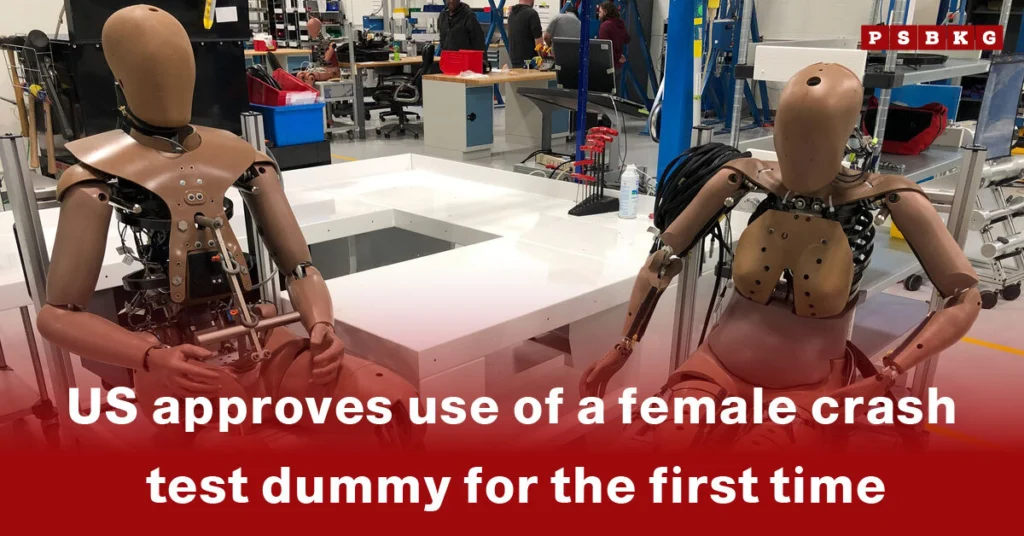
Latest News: For decades, crash tests have relied primarily on male-sized dummies, leaving gaps in understanding how accidents affect women. Now, the US has approved the use of a female crash test dummy for the first time, marking a significant step toward inclusive safety standards. Experts say this move could save lives, as women are physiologically different from men and respond differently to collisions. Car companies, regulators, and safety advocates alike are celebrating the decision, which brings long-overdue attention to an overlooked aspect of automotive design. It’s a small change with potentially huge consequences.
Why female dummies are so important
Women are not just smaller versions of men; their anatomy, bone density, and muscle distribution vary in ways that affect how injuries occur in crashes. Studies have shown that female passengers are more likely to suffer from certain injuries, even in collisions designed to be “safe.” Using a female dummy will allow researchers to better understand these risks, design safer airbags, adjust seatbelts, and refine car structures. Experts emphasize that this is about more than fairness — it’s about accuracy in safety data, and ultimately, protecting half the population that has been underrepresented in decades of automotive research.
The challenges in creating realistic dummies
Developing a female crash test dummy is not as simple as resizing an existing male model. Engineers and scientists must account for complex factors such as joint movement, muscle tension, and how different tissues respond to force. Every detail matters because real-world crashes involve sudden, unpredictable forces that can vary by inches or milliseconds. The approved dummy represents years of research, testing, and iteration, designed to simulate real female physiology as closely as possible. Experts say it is a milestone that required collaboration across engineering, medical research, and safety advocacy fields.
Impact on car manufacturers and regulations
Car manufacturers will now need to integrate the female dummy into testing protocols, which could change how vehicles are evaluated for safety ratings. Insurance companies and regulatory agencies may adjust standards based on new findings from these tests. While some in the industry initially resisted the additional testing requirements, many acknowledge that improved safety data benefits everyone. Beyond compliance, automakers see this as an opportunity to demonstrate commitment to protecting all passengers, not just the average male, and to respond to consumer demand for safer, more inclusive designs.
Lessons from decades of male-focused testing
Historically, crash testing centered on the “average male” because of long-standing assumptions about vehicle usage and simplicity in design. But decades of data now show that women are at higher risk for certain injuries, from whiplash to pelvic fractures, even in the same collision. This discrepancy has prompted advocacy groups to push for female representation in safety research. The introduction of female dummies represents a corrective step, addressing systemic bias that has gone unnoticed for years. It also sends a signal that engineering and science must consider diversity in human anatomy to achieve true safety.
Broader implications for public safety
The approval of a female dummy doesn’t just improve cars; it also raises awareness about gender disparities in other safety systems. From seat belts to airbags and child restraints, the way products are tested can have real-life consequences. Researchers hope that including female dummies will lead to safer roadways, fewer hospitalizations, and better-informed consumers. It is a reminder that data and research must reflect the populations they are intended to protect. Safety innovations often begin quietly in labs, but their impact can ripple through society, changing everyday life in tangible ways.
A step toward more inclusive technology
Beyond automobiles, the move highlights a broader push for inclusivity in technology and design. From medicine to workplace equipment, understanding physiological differences is crucial for preventing injuries and improving outcomes. The female crash test dummy is more than a research tool — it symbolizes a shift in how we think about safety and engineering. Experts are optimistic that this precedent will encourage other industries to consider diversity in design and testing, ultimately creating systems that serve everyone more effectively. It’s an example of progress that starts small but can have wide-reaching effects.
The road ahead
While approval is a major milestone, experts note that the work is far from over. Researchers will continue refining the dummy, exploring variations for different body types, ages, and even pregnancy. Car manufacturers will need to analyze new data and adjust designs, and regulators may update safety standards accordingly. For the public, this innovation offers reassurance that safety is evolving to reflect real-world conditions. As testing expands, future vehicles may be safer for everyone on the road, and decades-old gaps in understanding may finally close.