
A Major Global Decision
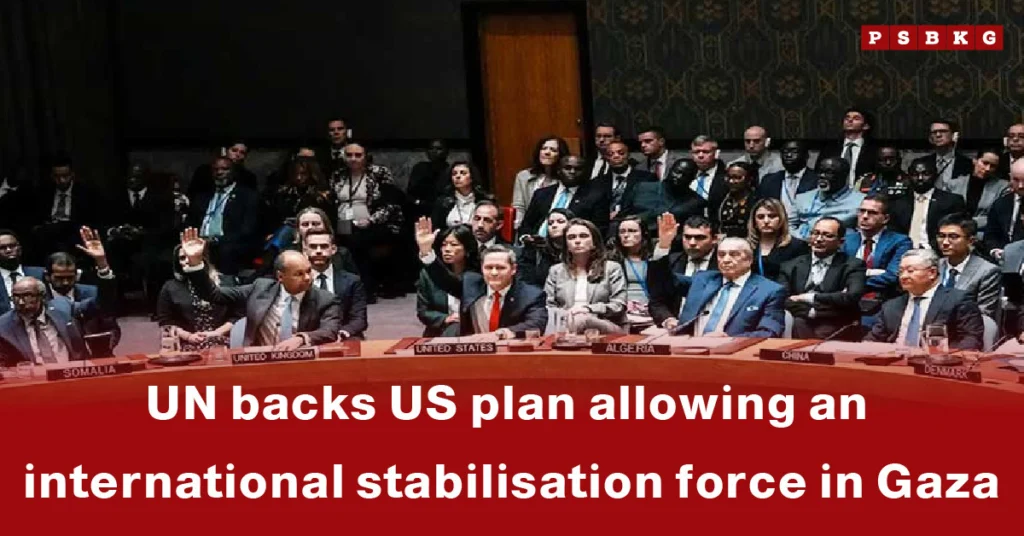
Latest News: The United Nations has approved a US-backed plan to deploy an international Gaza stabilisation force, marking one of the most significant global decisions in recent months. This move comes after long debates and growing concern over Gaza’s worsening humanitarian situation. The plan aims to restore order, provide safety to civilians, and prevent further escalation. The approval signals a shift toward collective international responsibility, as countries recognize that ongoing instability cannot continue unchecked. With this decision, the world hopes to create a pathway toward long-term peace and relief for the people of Gaza.
A Response to Severe Humanitarian Damage
The Gaza stabilisation force comes at a time when the region has suffered immense humanitarian damage, leaving thousands of families displaced and essential services struggling to function. The UN acknowledged that the situation has reached a point where local resources are no longer enough to manage daily emergencies. The force is expected to support medical assistance, food distribution, and the reconstruction of basic infrastructure. For many residents who have lost homes or loved ones, the decision offers a rare sense of hope. It reflects the global community’s recognition that Gaza needs more than statements—it needs immediate action.
Ensuring Civilian Protection
One of the primary goals of the Gaza stabilisation force will be protecting civilians who have endured months of constant fear and insecurity. The presence of international peace personnel aims to reduce violence, discourage armed confrontations, and safeguard areas where families seek shelter. According to UN officials, the force will focus on preventing further displacement and ensuring that humanitarian agencies can operate safely. With civilians repeatedly caught in crossfire, the international mission is seen as a much-needed buffer that prioritises human life above political conflicts.
A Diplomatic Win for the US
The approval also marks a diplomatic achievement for the United States, which played a key role in negotiating the Gaza stabilisation force plan. After weeks of discussions with global partners, the US convinced major powers to support this coordinated approach. For Washington, this move strengthens its influence in the region while demonstrating leadership in humanitarian efforts. However, American officials have also acknowledged that the success of the Gaza stabilisation force depends on cooperation from all parties involved. They emphasized that this is not a military intervention but a humanitarian initiative focused solely on safety and stability.
Challenges That Lie Ahead
Despite the approval, experts warn that the Gaza stabilisation force mission will not be easy. Gaza remains a highly sensitive region with complex political, security, and social challenges. Coordinating between different factions, ensuring safe access routes, and establishing neutral zones will require careful planning. The stabilisation force will need strong communication channels and trust-building measures to avoid misunderstandings on the ground. Even with international backing, the mission’s success depends on disciplined teamwork and patience. The UN acknowledges that this operation may take time but believes that gradual progress is better than continued uncertainty.
Global Responsibility for Peace
The decision reflects a wider belief that peace in Gaza is not just a regional issue but a global responsibility. Countries around the world have faced pressure from humanitarian groups urging stronger action. By approving the plan, the UN has sent a message that the suffering of civilians cannot be ignored. The international Gaza stabilisation force represents a collective promise to assist those who have endured repeated cycles of violence. It shows that when the world unites for a common purpose, even the most difficult conflicts can begin to move toward resolution.
A Step Toward Long-Term Stability
While the stabilisation force is a temporary measure, it lays the foundation for long-term peace efforts. The presence of neutral international personnel can help reduce tensions and create space for diplomatic dialogue. Over time, this could open doors for reconstruction, economic recovery, and political discussions that address the root causes of instability. For Gaza’s residents, it is a moment to breathe, rebuild, and hope for a more stable future. The road ahead is long, but the UN’s decision marks an important first step toward restoring dignity and safety in the region.