
A quiet but important understanding
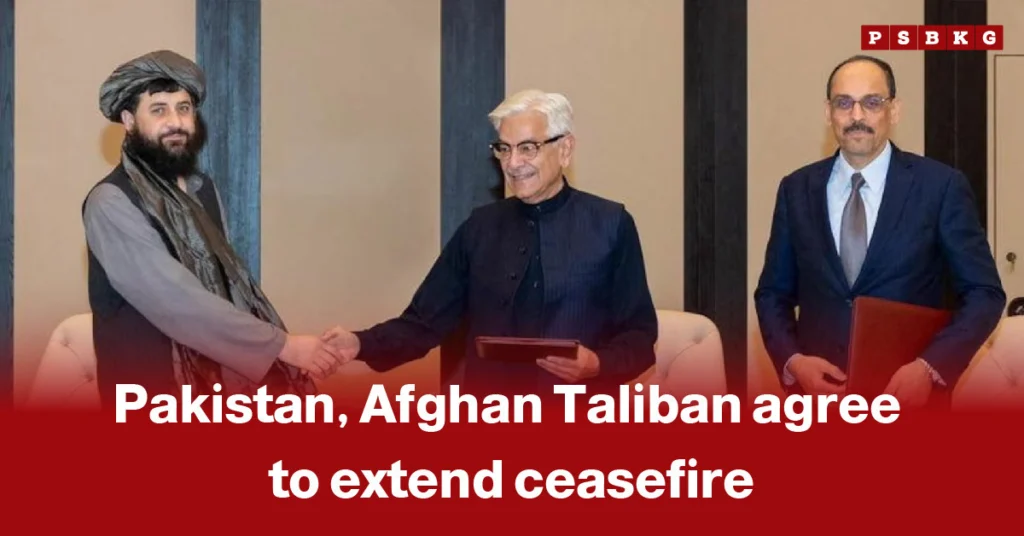
Latest News : In a significant development, Pakistan and the Afghan Taliban have agreed to extend their ceasefire, giving both sides a rare pause in what has been a tense and complicated relationship. The agreement, reached after days of indirect talks, is being seen as a small but meaningful step toward stability in the border region. Officials from both sides confirmed that communication lines remain open. While details of the extension were not made public, sources suggest that it covers key border areas where clashes and security incidents have taken place in recent months.
Why this truce matters now
The timing of this ceasefire extension is critical. Tensions had been rising along the Durand Line, with incidents involving border patrols, checkpoints, and militant groups operating in no-man’s-land areas. For both governments, easing that tension was essential. Pakistan’s security forces have been managing challenges from both domestic militants and cross-border elements. The Taliban government in Kabul, meanwhile, faces its own internal pressures economic strain, international isolation, and growing resistance in parts of Afghanistan.
A ceasefire, even if temporary, gives both sides breathing space.
Behind-the-scenes diplomacy
According to insiders, the talks leading to the extension were discreet. Pakistan pushed for guarantees that border attacks would not be repeated, while the Afghan Taliban requested that Pakistani forces show restraint during patrols. Regional intermediaries are believed to have helped smooth communication, with Tehran and Doha quietly encouraging continued dialogue. While there was no formal ceremony or joint statement, both sides reportedly view the agreement as a practical necessity rather than a political gesture. This pragmatic tone, officials say, is what makes the deal more likely to hold at least for now.
Fragile peace along a rugged border
The Pakistan-Afghanistan border, stretching over 2,600 kilometers, has always been difficult to manage. Its mountains, narrow valleys, and informal crossings have made it a hotspot for smuggling and militant activity. Over the past few years, repeated incidents have damaged trust between the two sides. Pakistan has long accused militants of using Afghan soil to launch attacks, while the Taliban often accuses Islamabad of airspace violations and heavy-handed patrols. This ceasefire doesn’t erase those issues, but it could help lower the temperature. Even a brief period of calm allows humanitarian groups to operate, trade routes to reopen, and displaced families to return home.
What both sides stand to gain
For Pakistan, a stable border means fewer security headaches and more room to focus on internal development. The government in Islamabad has repeatedly stressed that peace with Afghanistan is key to regional stability and economic progress. For the Taliban, cooperation with Pakistan helps strengthen its image as a responsible governing authority. It also opens the door to regional talks on trade, migration, and counterterrorism all of which the group needs to improve its standing internationally. Diplomats say both sides recognize that confrontation benefits no one. The Taliban needs legitimacy, and Pakistan needs security. In that sense, extending the ceasefire is a win-win, even if fragile.
The cautious road ahead
Despite the agreement, skepticism remains. Past ceasefires between Pakistan and militant groups have often broken down, either due to rogue attacks or lack of follow-up dialogue. The same risk applies here. Officials emphasize that the real test will come in the next few weeks. If border incidents remain low, confidence could slowly build. If not, the fragile calm might unravel quickly. Still, for now, there is cautious optimism. The extension represents at least a willingness to talk a reminder that even in the toughest times, diplomacy can still find a way through.