
A quiet offer in a tense neighborhood
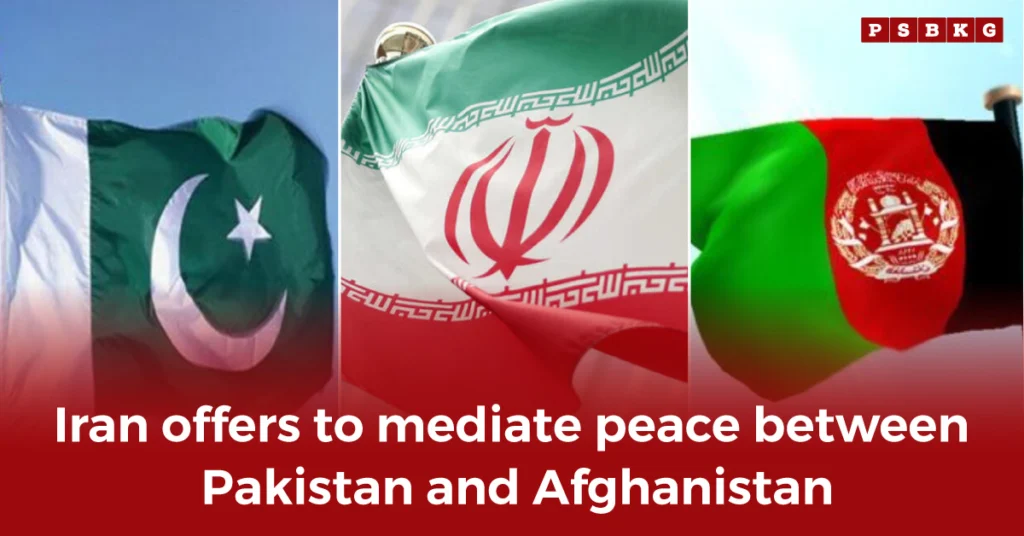
In a region where words are often sharp and tempers short, Iran has extended an unexpected hand. Tehran has offered to mediate peace between Pakistan and Afghanistan two neighbors whose relationship has been anything but calm lately. The offer came at a delicate moment. Border tensions have risen, cross-border attacks continue, and mistrust runs deep. Iranian officials, while careful with their phrasing, said they are willing to facilitate dialogue between Islamabad and Kabul to prevent further deterioration. It’s a quiet gesture, but in this part of the world, even small diplomatic steps matter.
Why Iran is stepping in now
Tehran’s interest in mediation isn’t new. But this time, it feels more urgent. Afghanistan’s instability since the Taliban’s return to power in 2021 has unsettled the entire region. Militancy, illegal crossings, and refugee flows have all affected Iran directly. Pakistan, meanwhile, faces a growing number of attacks from militants allegedly based in Afghan territory. By offering to help both sides talk, Iran is also protecting its own borders. The last thing Tehran wants is an escalation that could push violence closer to its frontier. Stability in Afghanistan means stability for Iran and that makes its mediation more of a necessity than charity. Iran’s Foreign Ministry said the country encourages constructive engagement between Islamabad and Kabul. Behind those measured words lies a clear message: regional peace won’t come through blame or isolation, but through conversation.
A troubled friendship between two neighbors
Pakistan and Afghanistan share a long, emotional history one filled with brotherhood, suspicion, and unhealed wounds. Since the Taliban regained power, relations have grown tense. Pakistan accuses the Afghan government of turning a blind eye to the Tehreek-e-Taliban Pakistan (TTP), a group responsible for deadly attacks across Pakistani territory. Kabul denies these accusations, insisting its soil is not used against anyone. Yet the violence continues, and every new incident strains what little trust remains. For ordinary people on both sides of the border, this tension is more than politics it’s daily life. Trade routes slow down, border crossings close, and families divided by the Durand Line suffer the consequences. Iran’s offer to mediate, therefore, isn’t just a diplomatic move. It’s a reminder that regional peace has a human face.
What Tehran brings to the table
Iran isn’t a neutral player, but it has credibility. It maintains diplomatic ties with the Taliban, trades with Afghanistan, and still has a functional relationship with Pakistan. Unlike Western countries that distanced themselves from Kabul, Tehran never completely stepped away. That gives it an edge both sides are likely to listen, even if cautiously. Iran has also hosted Afghan leaders before, offering its capital as a space for dialogue. Its approach tends to be slower, quieter, rooted in back-channel conversations rather than public pressure. Observers in the region say Iran’s real influence lies in its ability to bridge ideologies. It has a way of talking to both conservative Islamist groups and modern states without appearing intrusive. That’s a rare skill, and it might just be what Pakistan and Afghanistan need right now a patient listener who understands both languages.
The roadblocks ahead
Still, Iran’s mediation won’t be easy. Pakistan’s concerns are deeply security-driven, while Afghanistan’s leadership resists anything that looks like foreign interference. Convincing both to meet halfway will take time and trust two things in short supply. Then there’s the question of timing. Pakistan has just come out of a politically charged year, and its military remains focused on countering domestic terrorism. Afghanistan, meanwhile, faces growing isolation and economic hardship. Peace talks require stability at home, and neither side has much of it. Iran’s move, though, shows that someone in the region is still willing to try. Whether it succeeds or not, the effort itself matters. It signals that regional diplomacy is alive and that not every issue has to wait for global powers to intervene.
A small light in a crowded storm
For now, Islamabad hasn’t officially responded to Iran’s offer, and Kabul has kept quiet too. But unofficially, diplomats admit that Iran’s gesture could open a new channel even if it’s only for backroom discussions. Peace between Pakistan and Afghanistan won’t happen overnight. It might not even happen soon. But the willingness to talk, to listen, to at least share a table that’s how peace begins in this part of the world. Tehran’s offer might sound modest, but it carries a quiet optimism. In a region tired of violence and rhetoric, sometimes the simplest move a neighbor asking others to talk can make all the difference.