
A surprise announcement from Trump
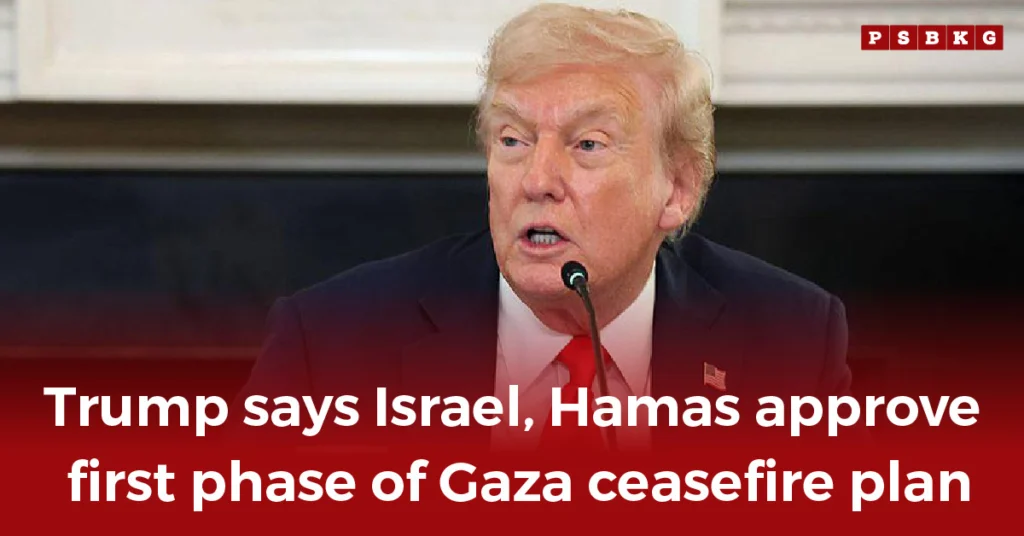
Latest News : It was late in the evening when Donald Trump posted on his social platform that Israel and Hamas had agreed to the first phase of the Gaza ceasefire plan. The news came before any official statement from Washington or Tel Aviv, instantly lighting up headlines around the world. Trump called it a “positive step” toward restoring peace, though many were caught off guard by how confident he sounded. The post didn’t give details, but it came just hours before diplomats confirmed that both sides had indeed approved an initial ceasefire framework. For a man no longer in office, it was yet another moment where Trump managed to make global events revolve, at least partly, around himself.
What this first phase includes
Reports from negotiators suggest the Gaza ceasefire plan will start with a temporary halt in fighting. There’s talk of releasing hostages, expanding humanitarian access into Gaza, and allowing more medical supplies to reach civilians. Officials in Egypt and Qatar have been leading the mediation efforts, with quiet backing from Washington. The first phase is meant to create enough calm to begin broader political talks later. Still, it’s unclear how long this pause might last. Previous truces between Israel and Hamas have broken down within days, and many observers are cautious about calling this one a breakthrough. But the tone of the region feels slightly different this time, calmer, maybe even hopeful.
Trump’s voice in a fragile moment
Trump’s announcement wasn’t coordinated with any government, yet it wasn’t random either. People close to his circle say he has kept informal contact with some of the same regional figures he worked with during his presidency. He often mentions the Abraham Accords, those normalization agreements between Israel and several Arab states, as one of his proudest achievements. That network of leaders and advisers remains active, and it’s possible Trump’s team heard about the Gaza ceasefire plan before it went public. Still, even if he wasn’t directly involved, his statement carried weight. When Trump talks about Middle East peace, the world listens, sometimes skeptically, but always curiously.
Global reactions and quiet optimism
Reactions to the news were mixed but mostly hopeful. European leaders called the ceasefire a “welcome first step,” while the United Nations urged both sides to honor it fully and protect civilians. In Gaza, where people have endured months of bombardment, even a few days of quiet mean a lot. Local aid groups said residents were desperate for relief, though many doubted whether this truce would hold. “We’ve seen this before,” one resident told reporters. “But maybe this time it will last longer.” Israeli officials, too, responded cautiously. A government spokesperson said the deal was being implemented “in phases” and that security remained the top priority. Hamas leaders, on their side, confirmed acceptance of the framework but tied future progress to ending the blockade and improving humanitarian conditions.
The politics behind Trump’s timing
For Trump, the Gaza ceasefire plan news came at an opportune time politically. With U.S. elections approaching, he has been emphasizing his foreign policy record and reminding voters that, under his leadership, the Middle East was “more stable.” Posting about the ceasefire allowed him to claim some credit for an event unfolding under a different administration. His supporters quickly echoed his post, calling it proof that “Trump’s diplomacy still works.” Critics, of course, saw it differently. They said he was trying to capitalize on a humanitarian crisis for attention. But whether the motivation was political or personal, Trump succeeded once again in placing himself at the heart of an international story.
What could come next
The next few days will test whether this ceasefire truly holds. Humanitarian agencies are preparing to send more aid trucks into Gaza, while mediators continue working on follow-up phases, possibly involving a longer truce or even talks on reconstruction. Diplomats say this first phase is fragile but necessary. It’s less about peace right now and more about stopping the immediate suffering. The bigger challenge will come later, when both sides have to decide whether to move from temporary calm to actual political compromise. As for Trump, he’s expected to keep commenting on developments, reinforcing his “deal-maker” image. Whether he genuinely influenced this outcome or just positioned himself near it, his voice continues to echo through global headlines.
Why it matters
Ceasefires like the Gaza ceasefire plan are never just about silence between gunfire. They are about testing political will, rebuilding trust, and giving civilians a glimpse of normal life. Even a short truce can make a huge difference in Gaza, for families waiting to rebuild, for hospitals struggling to function, for children who just want to sleep without fear. And if this agreement leads to something longer, it could change the diplomatic atmosphere across the region. The U.S., Egypt, and Qatar would all benefit from a successful truce, while Israel and Hamas could claim a small but significant win in reducing bloodshed. For now, it’s a moment of cautious relief, a pause in a storm that has raged for too long.
Closing thoughts
Donald Trump’s announcement may have caught the world off guard, but it also reminded everyone of how intertwined politics and perception can be. Whether or not he played a role, his message amplified a fragile hope that the Gaza ceasefire plan might finally quiet the guns, at least for a while.