

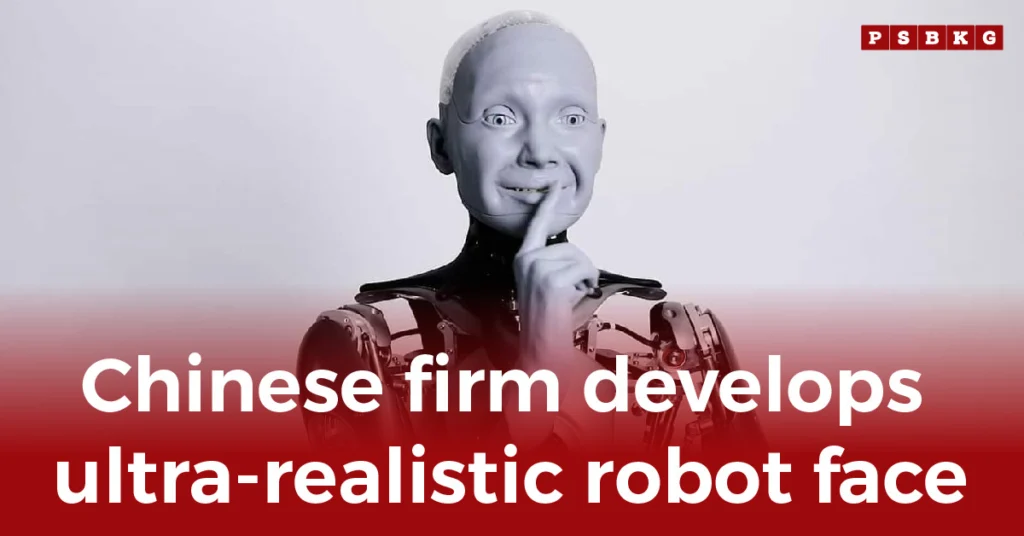
A glimpse into the future of robotics
In China, a tech company has unveiled what many are calling the most lifelike robot face to date. The creation, which blends advanced materials with artificial intelligence, has stunned viewers with its ability to mimic human expressions almost perfectly. Eyebrows shift, lips curl, and tiny facial muscles move in ways that make the robot seem eerily human. For some, it is a marvel of innovation. For others, it feels like a step into unsettling territory.
Why realism matters in robotics
Developers argue that ultra-realistic faces are more than just cosmetic. Robots with natural expressions are better suited for roles in healthcare, education, and customer service. When patients or students see a robot that looks approachable, interactions become smoother. Doctors say children especially respond better to humanlike robots, reducing fear in clinical settings.
But critics raise another side of the debate. If a robot becomes too real, people may feel confused or uncomfortable. Psychologists often refer to this as the “uncanny valley,” where something looks almost human but not quite, creating unease. The Chinese company insists its design avoids this by focusing on warmth and friendliness rather than strict imitation.
How the technology works
The robot face is powered by a network of micro-motors and sensors placed beneath a flexible skin-like surface. Engineers spent years studying human facial muscles, translating that knowledge into precise mechanical movements. The result is a face that can smile, frown, blink, and even show subtle shifts like curiosity or surprise.
Artificial intelligence adds another layer, enabling the robot to react in real time. When someone speaks, the system processes tone and emotion, then responds with matching expressions. This combination of mechanics and AI is what makes the face feel alive rather than programmed.
Applications being discussed
So where could such robots actually be used? The company points to elderly care homes as one possibility. A friendly, empathetic robot could keep residents company, remind them to take medication, or provide simple assistance. Schools are another option, where interactive robots could help teachers explain lessons or keep students engaged.
There is also talk of using them in service industries — reception desks, hotels, and even museums. A smiling face that can chat with visitors and answer questions could become common in the coming years. While some fear robots may replace human workers, supporters argue that these tools are meant to supplement rather than eliminate jobs, handling repetitive tasks while people focus on more complex roles.
Reactions from the public
Online reaction in China has been mixed. Videos of the robot face spread quickly on social media, attracting both awe and skepticism. Some praised the achievement as proof that Chinese tech firms are pushing the boundaries of innovation. Others worried about privacy and ethical issues, asking what happens when machines become too humanlike.
International observers have also weighed in. Robotics experts in Europe and the US acknowledged the technical breakthrough but urged caution. They say regulations need to catch up before such lifelike machines enter daily life. Without clear guidelines, risks of misuse or unrealistic expectations could grow.
The ethical questions
As with many advances in AI and robotics, the unveiling of this ultra-realistic face raises bigger questions. Should robots look like us at all, or should they remain clearly mechanical? How much should they be allowed to mimic human behavior? And at what point does comfort turn into deception?
Philosophers and ethicists argue that transparency is key. Users should always know when they are interacting with a machine. The Chinese company behind the robot says it shares this view, promising to focus on beneficial uses rather than entertainment tricks. Still, the debate continues, reflecting wider concerns about technology’s role in society.
Looking forward
For now, the robot face is still a prototype, not yet ready for mass production. But engineers are confident it will pave the way for a new generation of service robots. Whether in hospitals, classrooms, or homes, machines with friendlier, more human faces could become a common sight within a decade.
The launch in China marks not only a leap in design but also a moment of reflection. Technology continues to blur the lines between human and machine, and societies everywhere must decide how far they want to go. What seems extraordinary today may soon become ordinary, just another face we learn to recognise — even if it is made of circuits and code.