
Anger spills into the streets
In cities across Italy, thousands of people have been gathering once again, voicing anger over the interception of aid ships headed for Gaza. The protests, which began as scattered rallies, have swelled into larger demonstrations. Placards, chants, and long marches filled public squares, with protesters demanding both justice for Gaza and accountability from governments seen as silent on the crisis. The momentum shows no sign of slowing, especially as workers’ unions push towards a nationwide general strike.
The flotilla raid that ignited unrest
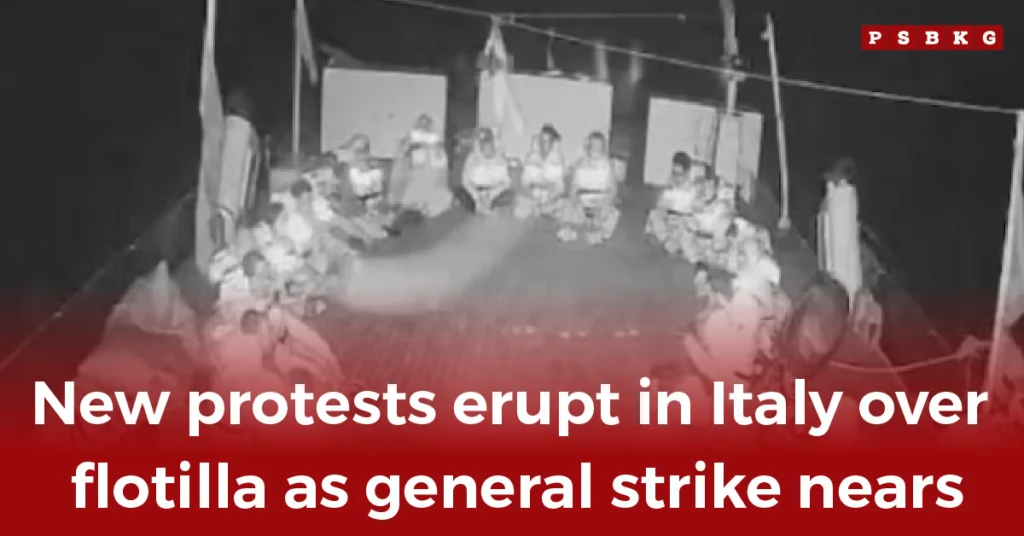
The spark for this movement was the interception of a humanitarian flotilla by Israeli forces. Aid ships carrying food, medical supplies, and volunteers were halted at sea, an act that triggered global outrage. For Italians already critical of foreign policy stances, the incident became a rallying point. Activist groups argue that blocking aid is a violation of international law, and they see the protests as a moral responsibility. Italy’s role in international diplomacy is being questioned, with demonstrators pressing the government to take a stronger stand.
Growing call for solidarity
What makes the protests striking is their diversity. University students, trade unionists, religious leaders, and ordinary families are joining hands. In Rome, Florence, and Milan, church bells rang in symbolic solidarity, while workers staged walkouts to highlight their frustration. Community groups are also mobilising on social media, amplifying footage from Gaza and urging others to participate in the strikes. Observers say the anger is not only about one flotilla raid but also about years of unresolved grievances tied to Gaza’s blockade and the human cost it has brought.
General strike looms
As tensions rise, unions have announced preparations for a general strike. Negotiations between union leaders and government officials appear limited, with workers insisting the strike is both a political and humanitarian statement. Public transport services, schools, and even healthcare systems could be disrupted if the strike proceeds on schedule. Analysts warn the government faces a test of balancing domestic unrest with its foreign policy ties. The general strike, if it goes ahead, will be one of the most significant in recent years, reflecting how the Gaza issue has penetrated daily Italian politics.
Political pressure mounts
The Italian government is under increasing pressure. Opposition leaders have criticised the ruling coalition for staying muted on the Gaza blockade. Meanwhile, ministers are caught between calls for solidarity with Palestinians and the realities of maintaining ties with Israel and Western allies. Some lawmakers are demanding Italy recognise the humanitarian crisis more openly and support stronger European Union interventions. The protests are turning into a political storm, one that risks reshaping debates in parliament.
Voices from the ground
On the streets, the voices are emotional. One protester in Naples described joining the rally because “no one can ignore starving children,” while a group of students in Bologna carried banners reading “Freedom for Gaza, dignity for all.” In interviews, demonstrators spoke about a sense of shared humanity, connecting their economic struggles with the plight of Palestinians. This blending of local frustrations and global solidarity is adding fuel to the protests. The looming general strike, they say, is not just about Gaza but also about fairness and justice closer to home.
What comes next
The coming days will be decisive. If the general strike unfolds as planned, it could paralyse parts of Italy’s economy, sending a message that goes beyond national borders. For Gaza, the solidarity may not change immediate realities on the ground, but for Italian society, it is reshaping conversations about morality, politics, and responsibility. The flotilla raid may have been one incident, but its echoes are reverberating across Europe, with Italy now at the centre of one of the loudest responses.