
A strike that turned into a movement
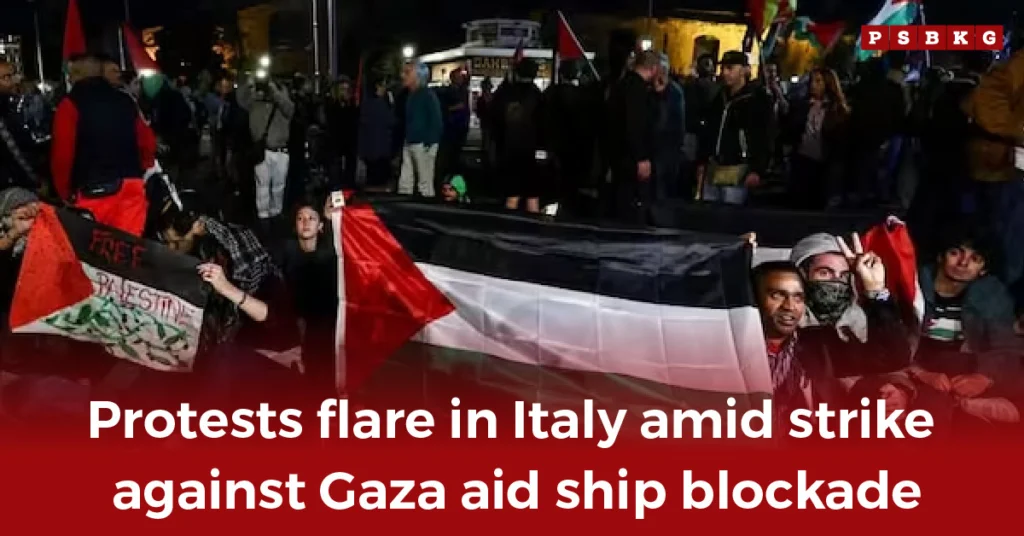
Latest News : In Italy, what began as a labor strike quickly transformed into a wider Italy Gaza aid protest. Dock workers and activists gathered to oppose the blockade on ships carrying aid bound for Gaza. Their message was simple but loud: they refused to stand by as humanitarian supplies were stopped on political grounds. The protest, unfolding in ports and city streets, carried both economic and moral weight. For many Italians, it was not just about solidarity with Palestinians but also about voicing anger at policies seen as unjust and heavy-handed.
Why the blockade matters to Italians
Gaza feels far away from Europe’s ports, yet the blockade has stirred strong emotions in Italy. Many see echoes of their own history, of times when ordinary people suffered because of political conflicts. Unions have been particularly vocal, saying workers should not be forced to handle goods linked to blockades or restrictions on aid. Humanitarian groups in Italy argue that the crisis in Gaza is not just a Middle Eastern problem but a human one. By refusing to stay silent, they believe they are taking a stand for universal rights.
Clashes between activists and authorities
The protests were not without tension. In several cities, police were deployed to manage crowds, and scuffles broke out in front of government offices during the Italy Gaza aid protest. Demonstrators carried banners, some calling for an end to arms sales to Israel, others demanding the safe passage of aid ships. Authorities insisted on maintaining order, but the images of riot police facing off against workers with placards struck a powerful contrast. For the protesters, even the confrontations underscored their belief that justice sometimes requires resistance.
Voices from the streets
Many of those on the streets were not seasoned activists but ordinary citizens who felt compelled to join. Teachers, students, healthcare workers, people who said they could not ignore what was happening in Gaza. A dock worker in Genoa told local media that refusing to handle ships connected to the blockade was a moral duty. Another protester said that Italy, with its long history of seafaring and trade, should never allow its ports to be linked to humanitarian suffering. These voices gave the protests a raw, human texture that official statements often lack.
Political ripples in Rome
The demonstrations quickly reached the political stage. Opposition parties in parliament raised questions about Italy’s role and whether the government was doing enough to support humanitarian efforts during the Italy Gaza aid protest. Ministers defended their policies, insisting that Italy was committed to peace and aid through official channels. Still, the sight of growing protests put pressure on leaders, especially as international headlines began to highlight Italy’s role in the dispute. For the government, the strike became more than a labour issue, it became a test of political credibility.
Solidarity across borders
The Italian protests also connected with a wider wave of demonstrations across Europe. In Spain, France, and the UK, activists staged rallies demanding the free flow of aid to Gaza. Italian organisers often highlighted this broader network, saying they were not alone in their struggle. By linking arms with movements abroad, they added strength to their message. For many, the protests symbolised how humanitarian concerns can transcend national borders, creating a shared call for justice.
What lies ahead
The strike and protests may not immediately change policies on aid ships, but they have already made an impact. They have put Gaza back into headlines, forced politicians to respond, and reminded the world that humanitarian issues resonate far beyond conflict zones. Italian unions have signalled they may continue to resist handling cargo linked to the blockade. Activists are planning more demonstrations in the coming weeks as part of the ongoing Italy Gaza aid protest. Whether or not the blockade eases, the protests show that ordinary citizens in distant countries still believe they have a voice in global struggles.