
A trophy moment turned sour
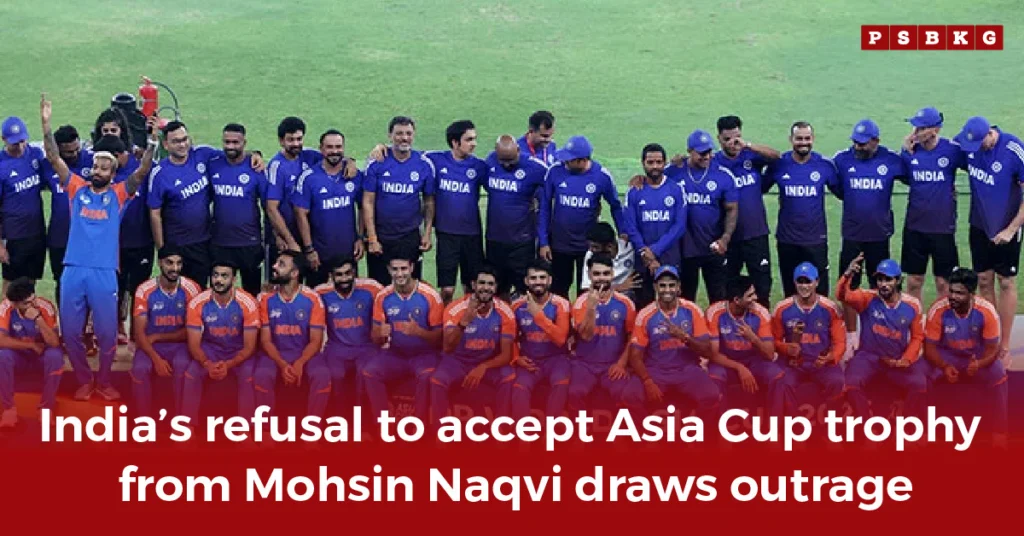
Latest News : Cricket finals are supposed to end with celebration, handshakes, and pictures that fans remember for years. But the Asia Cup ceremony this year has sparked a storm for reasons far beyond the pitch. The India trophy refusal occurred when Indian players refused to take the winner’s trophy from Mohsin Naqvi, the Pakistani official who was present to hand it over. What should have been a routine part of the ceremony was overshadowed by the awkward refusal, leaving fans stunned and sparking heated reactions across social media.
The trophy that never crossed hands
According to officials, Naqvi, who was invited as a guest of honor, was expected to present the trophy to the Indian team. But when the time came, the players declined, choosing instead to accept it from another official. This India trophy refusal was captured on camera, the hesitation, the avoided handover, and within minutes, clips went viral online. The incident looked small on the surface. Yet in cricket, symbols matter. A trophy is not just a cup of metal; it represents respect, rivalry, and sportsmanship. By refusing to take it from Naqvi, India left many wondering whether the spirit of the game had been compromised.
Fans erupt with anger and disappointment
Fans across the region didn’t hold back. Hashtags criticizing the India trophy refusal started trending. Pakistani fans called it petty, pointing out that cricket should rise above politics. Even some Indian commentators admitted the refusal could have been handled with more grace. Sports journalists wrote that moments like these stick longer in memory than the matches themselves. For a generation of fans, the Asia Cup 2025 may now be remembered less for the cricket and more for the controversy at the podium.
Politics on the sidelines of cricket
The India-Pakistan cricket rivalry has never existed in a vacuum. Every series, every tournament involving the two sides carries political undertones. While fans want to see pure sport, politics often finds its way to the center stage. Mohsin Naqvi’s presence at the ceremony, though routine, became part of that political backdrop. His role as a Pakistani figure added weight to what might have otherwise been a simple handover. The India trophy refusal was quickly interpreted as a political statement, whether intended or not.
Calls for accountability and reflection
Cricket boards and governing bodies now face pressure. Should the India trophy refusal be left unchecked? Should sportsmanship be enforced at the highest levels, not only in words but also in actions? Analysts argue that incidents like this harm the spirit of international sport. Cricket is watched by millions, many of them young fans. For them, these moments shape perceptions about respect, rivalry, and fairness. If the game allows political grudges to overshadow simple gestures, the message sent is far from healthy.
Beyond the boundary lines
It’s also worth noting how much power small gestures carry in South Asian cricket. A smile at the toss, a handshake after a match, a shared laugh between rival players, these little moments often soften decades of political rivalry. The India trophy refusal did the opposite. It deepened divides, reinforced negative perceptions, and handed critics more fuel. For many fans, the hope is that cricket can someday become a bridge between the two countries rather than another battleground. This incident, however, pushed that hope further away.
The road ahead for cricket diplomacy
As governing bodies look forward to the next major tournaments, questions remain. Will politics continue to shape cricketing moments, or can sport rise above it? Will future ceremonies ensure smoother, more respectful protocols? What is certain is that Asia Cup 2025 will not just be remembered for its winners and losers. It will be remembered for the India trophy refusal that sparked outrage, for the hand that stayed empty, and for the missed opportunity to show that cricket can indeed unite where politics divides.