
Raising concerns at the global stage
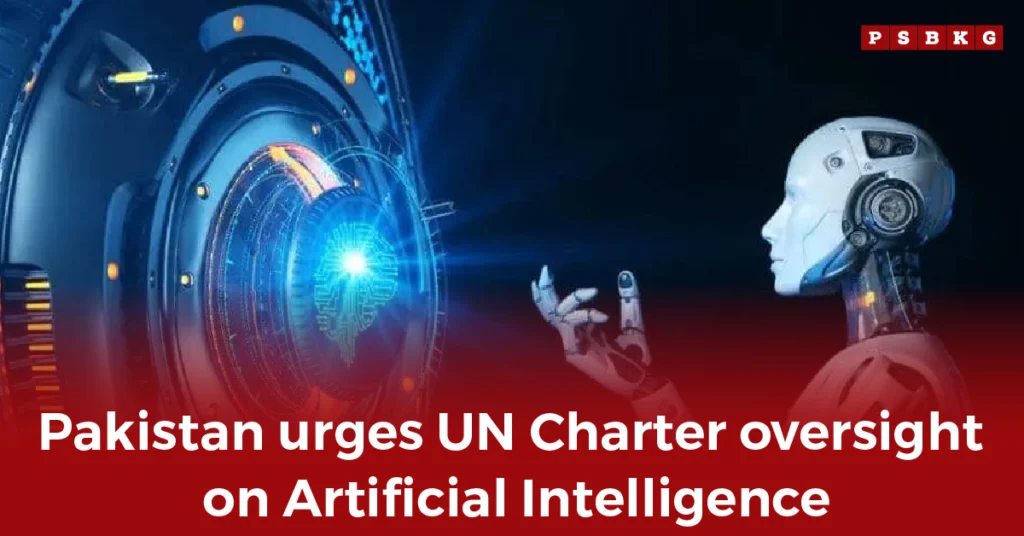
Latest News : Pakistan UN AI oversight has become a key focus as Pakistan has called for stronger regulation of artificial intelligence under the framework of the United Nations Charter. Officials argued that while AI brings vast opportunities for development, innovation, and global progress, it also poses significant risks if left unchecked. At recent discussions, Pakistan’s representatives emphasized that AI must be developed and deployed within ethical boundaries to ensure it benefits humanity rather than causing harm.
Why the UN matters in AI governance
The United Nations Charter has long been the guiding document for international cooperation and conflict resolution. By urging AI oversight under the Charter, Pakistan is essentially asking for a rules-based global approach. The argument is that, without collective responsibility, powerful nations and tech giants could dominate AI in ways that deepen inequalities and undermine peace. According to Pakistan, the UN’s role should be to provide legitimacy, fairness, and safeguards in this rapidly advancing field.
Balancing progress with accountability
Risks of unregulated AI
Experts warn that without oversight, AI could worsen global divides. Wealthier nations with access to advanced technology may widen their advantage, leaving developing countries behind. Additionally, AI applications in warfare, misinformation campaigns, and surveillance raise alarm bells. Pakistan echoed these concerns, stressing that AI should not become another tool for power politics. Instead, it should be guided by principles of fairness and equality, values enshrined in the UN Charter.
Pakistan’s stance in context
Pakistan’s advocacy for AI governance ties into its broader commitment to multilateralism. The country has consistently supported international cooperation in areas ranging from climate change to counterterrorism. By bringing AI into the conversation, Pakistan is signaling that emerging technologies cannot remain outside the scope of international law. Officials argued that just as nuclear energy required global oversight decades ago, AI now demands the same collective attention.
Linking technology with human rights
One of the strongest themes in Pakistan’s statement was the link between AI and human rights. AI tools, if unregulated, could infringe on privacy, limit freedoms, and deepen discrimination. Pakistan underscored that AI should not become a system that controls people, but one that empowers them. For this reason, the UN was presented as the most credible platform to align AI development with human dignity.
What global governance could look like
The call for oversight is still in early stages, but Pakistan suggested that the UN could provide guidelines for ethical AI, set international standards, and encourage knowledge-sharing between countries. This would allow smaller and developing nations to benefit from AI instead of being left behind. By placing AI under the UN Charter, the goal would be to ensure that technological innovation serves peace, development, and justice.
Looking forward
As artificial intelligence advances at a rapid pace, the debate over global regulation is only beginning. Pakistan’s call may not immediately translate into binding rules, but it contributes to an important discussion that affects every country. Oversight under the UN Charter could help build trust and prevent misuse of technology in ways that harm international peace. For Pakistan, the message is clear: innovation should not come at the cost of fairness, security, or human values.