
A message rooted in urgency
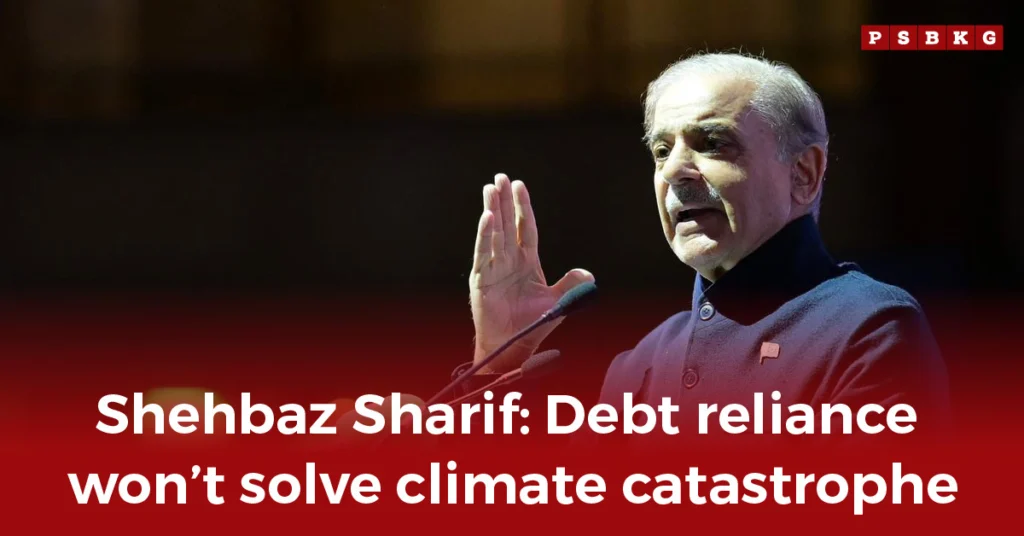
Latest News : Prime Minister Shehbaz Sharif recent words on climate change were not just another political statement. Speaking on the global stage, he made it clear that piling debt upon vulnerable nations cannot address a crisis that is already unfolding before our eyes. For Pakistan, which faced historic floods only a year ago, this is not theory. It is lived reality. His remarks cut through the noise, pointing to the imbalance in how the world currently responds to climate disasters.
Pakistan’s climate wounds still fresh
The devastating floods of 2022 displaced millions and caused billions of dollars in damages. Families lost homes, farmers lost entire seasons of crops, and infrastructure was washed away. Pakistan has not forgotten, and neither has its leadership. When Shehbaz Sharif argues that debt-driven finance is unsustainable, he speaks from that backdrop. The world pledged support, but the delivery has been slow, and much of it tied to loans. For a country already burdened with repayments, the formula simply does not work.
The wider global picture
It is not just Pakistan. Many developing nations face the same dilemma. Climate change hits hardest where resources are already stretched thin. When floods, droughts, or cyclones strike, governments rush to borrow. Debt piles up, while recovery remains fragile. Shehbaz Sharif’s call is therefore not about one country’s grievance, but a broader challenge of fairness. Should the nations contributing least to climate change carry the double weight of destruction and debt? His answer is no.
Climate justice and responsibility
Underlying his speech was the demand for climate justice. Rich nations, historically responsible for higher emissions, have more capacity to help. The call for grants, climate funds, and genuine support is not charity. It is about responsibility. Shehbaz Sharif positioned Pakistan’s case within this frame, reminding the world that without equitable solutions, the crisis will deepen. The message was aimed not just at policymakers but at public opinion too. Awareness and pressure from ordinary people can often drive change faster than political summits.
A choice between survival and growth
For Pakistan, the choice is harsh. Every year, billions go into debt repayments. At the same time, billions more are needed for rebuilding after climate shocks. This leaves little space for investments in growth, education, or health. The cycle is unsustainable. Shehbaz Sharif warning highlights the risk of leaving vulnerable nations trapped between survival and progress. It is a cycle that, if not broken, could stall entire generations. His words resonate as both a warning and an appeal.
Beyond speeches, what next?
The real test, as always, lies in follow-up. Global forums have often heard strong speeches, but change is slow. Will developed countries open more grant-based financing? Will climate funds become more accessible and less tied up in red tape? These are the questions that remain. Pakistan has placed its perspective on record, but it is up to the global community to respond. The climate catastrophe is not waiting. Floods, fires, and storms are already reminders that time is running out.
A shared future at stake
Shehbaz Sharif remarks point to a larger truth. The climate crisis is not limited by borders. What happens in Pakistan, or in Africa, or in the Pacific, eventually reverberates across the world. Ignoring debt traps and leaving nations vulnerable only increases instability for everyone. The appeal is therefore not just about compassion. It is about shared survival. If the global response remains tilted toward loans, the cracks will widen. If fairness prevails, there may still be time to protect communities everywhere.