
Pakistan Raises Security Concerns at UNSC
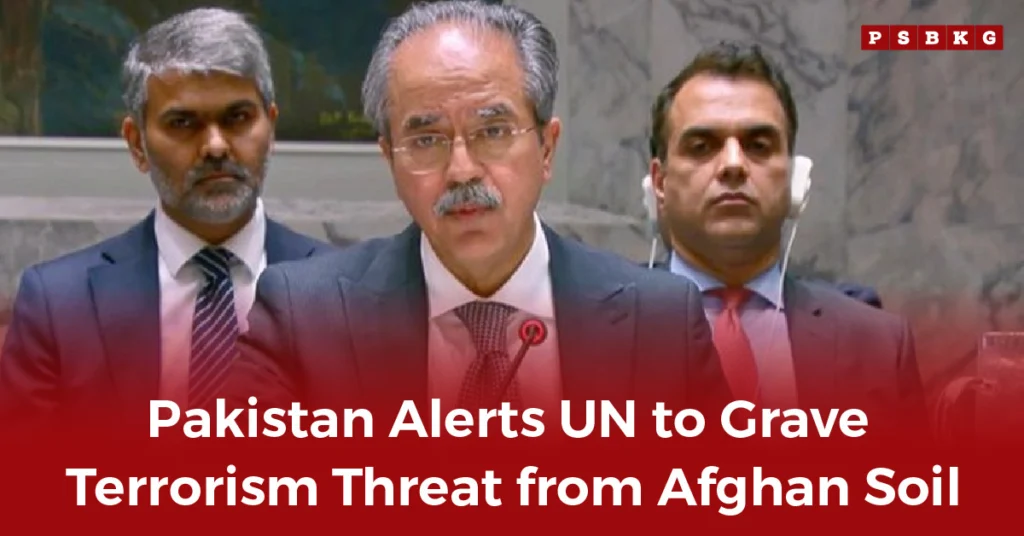
Latest news: Pakistan has told the United Nations Security Council (UNSC) that terrorism originating from Afghanistan remains the gravest threat to its national security and regional peace. Speaking during a Council briefing on Afghanistan, Pakistan’s Permanent Representative to the UN, Ambassador Asim Iftikhar Ahmad, called for urgent international attention to address the issue.
Terrorist Networks Operating from Afghan Sanctuaries
Ambassador Iftikhar revealed that multiple terrorist entities including Daesh-K, Al-Qaeda, Tehreek-e-Taliban Pakistan (TTP), East Turkestan Islamic Movement (ETIM), Balochistan Liberation Army (BLA), and the Majeed Brigade continue to operate from Afghan soil. He said more than 60 camps are functioning as hubs for cross-border infiltration, training, and attacks against Pakistan.
Evidence of Collaboration Among Groups
The envoy stressed that Pakistan has credible evidence of coordination among these groups, citing joint training, illicit arms trade, and coordinated assaults targeting civilians, security forces, and development projects. He also highlighted the online dimension of terrorism, pointing out that nearly 70 propaganda accounts traced to Afghan IP addresses were being used to spread extremist content.
Joint Efforts for Sanctions
Ambassador Iftikhar noted that Pakistan and China had jointly requested the UN’s 1267 Sanctions Committee to list the BLA and Majeed Brigade, expressing hope for swift international action. He described the TTP, with around 6,000 fighters, as the largest terrorist group on Afghan soil, adding that Pakistan had intercepted several infiltration attempts and seized sophisticated weapons left behind by foreign forces during their withdrawal.
Heavy Costs and Refugee Burden
The envoy underlined that Pakistan has paid a heavy price in defending its borders, with 12 soldiers martyred in operations this month alone. He also drew attention to Afghanistan’s economic and humanitarian crisis, stating that the UN’s 2025 Humanitarian Needs and Response Plan had received only 27% of its required funding. Pakistan, he reminded, has hosted millions of Afghan refugees for over four decades with limited international assistance, urging a fairer sharing of the burden.
Path to Lasting Peace
While acknowledging that Afghanistan has witnessed the end of civil war for the first time in 40 years, Ambassador Iftikhar described the situation as deeply worrying. He stressed that isolation would only worsen challenges and emphasized that sustained international engagement with Afghanistan was the only way to secure lasting peace and stability.