
Turning New York’s Trash into Treasure
Latest News: Walk through New York on a summer evening and you’ll see trash bags piled high. Pizza boxes, watermelon rinds, heaps of leaves in autumn, all waiting for collection. In most cities that waste would vanish into landfills. But here, thanks to New York food waste composting, some of it takes on a second life. It becomes what many gardeners call “black gold.”
A Facility with a Different Kind of Mission
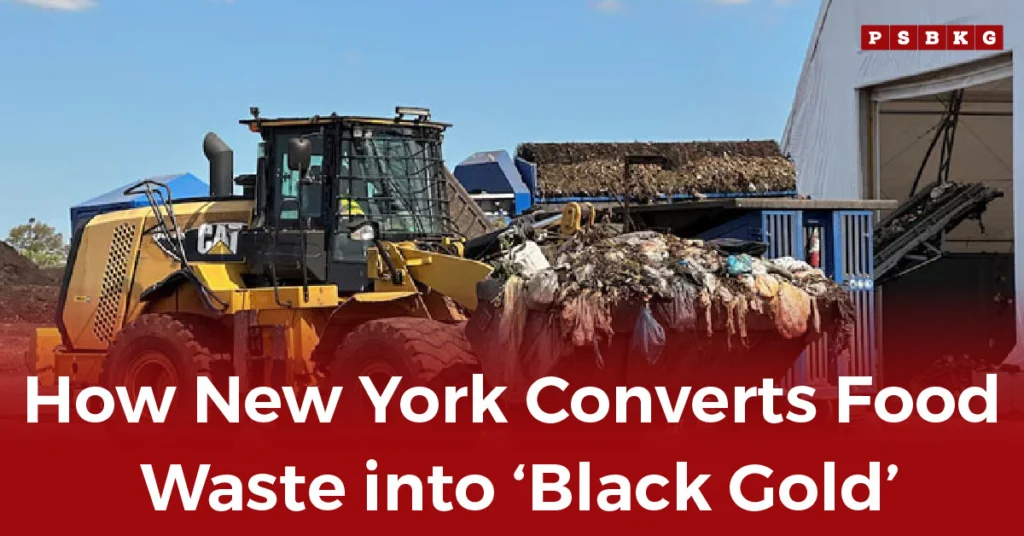
On Staten Island sits a composting facility that looks fairly ordinary at first glance. Trucks roll in, dumping loads of yard trimmings and kitchen scraps. But inside, something very deliberate is happening. This is where New York’s organic waste is shredded, screened, and placed into aerated static pile bunkers. That’s a technical way of saying the waste is given the perfect environment to transform.
Temperatures soar to more than 100 degrees Fahrenheit. The heat is no accident. It’s essential, killing pathogens and weed seeds while setting the stage for nature’s real workers—fungi, bacteria, and insects. Over weeks, they break everything down, quietly turning trash into nutrient-rich soil.
From Food Scraps to Black Gold
The end product of New York food waste composting is almost unrecognizable from what came in. Dark, crumbly compost emerges, rich with nutrients and life. Jennifer McDonnell, Deputy Commissioner for Solid Waste Management, calls it “awesome compost” that can revive soils across the city. And it doesn’t just stay within municipal storage. Some is sold to landscapers, while schools, gardens, and residents receive it free of charge.
This year alone, New Yorkers have received nearly 6 million pounds of compost. For community gardens tucked between brick buildings or schools trying to keep green patches alive, it’s a gift. The compost helps soil hold water, reduces runoff, and keeps trees and plants thriving.
Why It Matters Beyond the Garden
Food scraps and yard trimmings make up a huge portion of household trash in the U.S. According to the Natural Resources Defense Council, they’re the single largest category. Left in landfills, this waste doesn’t just sit quietly. It produces methane, a greenhouse gas far more potent than carbon dioxide.
Eric Goldstein, Environmental Director at the council, puts it simply: if cities want to fight the climate crisis, food scraps can’t go to landfills. Composting may feel small-scale, but multiplied across a metropolis the size of New York, the climate benefits are huge.
A City-Wide Effort in Progress
For New Yorkers, the system isn’t optional. Residents are expected to separate food scraps, food-soiled paper, and yard waste from their trash. Compliance is uneven, and the city paused enforcement earlier this year. Officials say enforcement will restart in 2026, giving people time to adapt.
It’s a cultural shift as much as a logistical one. People are used to tossing everything into the same bag. Asking millions of residents to treat banana peels and pizza crusts differently requires education and habit change. Yet, the payoff less methane, healthier soils, greener neighborhoods makes the effort worth it.
Compost as a Symbol of Change
It’s easy to overlook what happens after the trash truck pulls away. But in New York, waste doesn’t have to mean loss. The story of the Staten Island Compost Facility is also the story of New York food waste composting and how cities can rethink garbage. Each bag of scraps represents both a challenge and a possibility.
The piles heating up inside those compost bunkers are more than just decomposing waste. They’re symbols of resilience, of finding value where most people see none. For New Yorkers tending gardens, walking shaded streets, or watching rain soak into healthier soil, that “black gold” makes all the difference.